

By Robert Lama, President — Miami International Yacht Sales | Updated July 2026
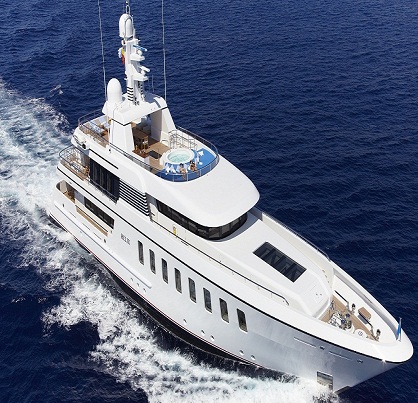
Feadship or Oceanco — when serious buyers commission a fully custom superyacht above 50 meters, these two Dutch yards dominate the conversation more than any others. The Feadship vs Oceanco debate has defined the top tier of the superyacht market for decades, yet the two builders could not be more different in philosophy, design approach, and ownership experience. This guide provides a complete, honest comparison — and extends the analysis to Lürssen and Heesen, the two other yards that belong in any serious consideration at this level.
After 14+ years of representing buyers in the 50–250 meter segment from Miami, here is everything you need to know before engaging any of these four yards — design philosophy, engineering approach, signature builds, build timelines, price ranges, sustainability credentials, and how US-based buyers actually navigate the commission process from South Florida.
📞 Planning a superyacht acquisition above 50 meters? Call Robert Lama directly: +1-305-857-8939
Feadship vs Oceanco — Plus Lürssen & Heesen at a Glance
| Factor | Feadship | Oceanco | Lürssen | Heesen |
|---|---|---|---|---|
| Country | Netherlands | Netherlands | Germany | Netherlands |
| Founded | 1849 | 1987 | 1875 | 1978 |
| Size Range | 50m – 120m+ | 60m – 140m+ | 50m – 180m+ | 30m – 80m+ |
| Build Type | Fully custom only | Fully custom only | Fully custom only | Fast displacement / custom |
| Construction | Steel / aluminum | Steel / composite | Steel / aluminum | Aluminum |
| Known For | Precision, heritage, BREAKTHROUGH | Bold design, Koru, Black Pearl | Scale, Azzam, dominance | Speed + superyacht scale |
| Typical Price Range | $50M – $500M+ | $80M – $500M+ | $100M – $700M+ | $15M – $100M+ |
| Build Timeline | 2.5 – 4 years | 3 – 5 years | 3 – 5 years | 2 – 3.5 years |
| Sustainability Leadership | BREAKTHROUGH hydrogen ✅ | REV Ocean partner ✅ | Methanol / hybrid in progress | Diesel-electric standard |
| Resale Liquidity | Highest in segment | Strong (selective market) | Strong (limited production) | Good (aluminum advantage) |
Feadship — The Gold Standard of Custom Superyacht Construction
Few yards own the word “bespoke” the way Feadship does. Founded in 1849 and headquartered in the Netherlands, Feadship has spent 175 years building a reputation that places it at the very top of the global superyacht construction hierarchy by one specific measure: pure-custom precision engineering with zero compromises.
Feadship operates as a partnership between Royal Van Lent and Koninklijke De Vries shipyards, with De Voogt Naval Architects providing in-house naval architecture and engineering. This fully integrated structure — rare even at this level — means the same team designs, engineers, and builds every Feadship from the initial brief through delivery. No external naval architects, no compromised communication between design and build teams.
Feadship’s Most Significant Builds
- ANNA (110m, 2012) — A floating residence with an atrium, two helipads, and enough interior volume to make most penthouses feel modest.
- VENUS (80m, 2012) — Designed in partnership with the late Steve Jobs and designed by Philippe Starck. Minimalist, razor lines, instantly recognizable. Still considered one of the most influential modern superyacht designs ever produced.
- BREAKTHROUGH (118.8m, 2025) — The most significant Feadship delivery in a decade and arguably the most important superyacht launched anywhere in 2025. BREAKTHROUGH is the world’s first hydrogen fuel-cell superyacht, awarded Motor Yacht of the Year at the 2026 World Superyacht Awards in Venice. Widely linked to Bill Gates, BREAKTHROUGH signals where Feadship — and the broader industry — is heading on sustainability.
Who Commissions Feadship
Feadship clients are typically experienced yacht owners commissioning a second or third custom build who prioritize engineering excellence, discretion, and long-term value retention over visual drama. The yard’s client retention rate is extraordinary — a disproportionate number of Feadship owners eventually commission a second Feadship. Browse our full yacht search for currently available inventory across all superyacht builders.
Feadship Key Facts (2026)
| Metric | Detail |
|---|---|
| Annual output | 3–5 yachts per year |
| Typical client profile | Repeat UHNW owners, family offices, institutional buyers |
| Signature technology | Hydrogen fuel cells, hybrid diesel-electric, noise reduction |
| Resale performance | Strongest value retention in segment |
| Orderbook (2026) | Full through 2028 on most berths |
Oceanco — Visionary Design and Bold Engineering
Founded in 1987 in Alblasserdam, the Netherlands, Oceanco is the youngest of the four yards in this comparison — and in some respects the most visually distinctive. Where Feadship builds superyachts that tend to reward understanding over first impressions, Oceanco produces vessels that create immediate visual impact: bold profiles, unconventional geometries, and design collaborations with the world’s most recognized naval architects and exterior stylists.
Oceanco uses a combination of steel, aluminum, and composite materials depending on the project — giving them more flexibility in hull design than yards committed exclusively to steel or aluminum construction. Their willingness to experiment with materials and structural approaches has produced some of the most technically ambitious superyachts ever built.
Oceanco’s Most Significant Builds
- KORU (127m, 2023) — Jeff Bezos’ three-masted sailing superyacht, built at Oceanco’s Alblasserdam facility. At $485 million, Koru is one of the most expensive sailing yachts ever constructed and attracted more global media attention at her launch than any yacht in the previous decade. Three masts rising to the height of the Great Pyramid of Giza. No helipad (a dedicated support vessel travels alongside). Oceanco’s most high-profile recent delivery.
- BLACK PEARL (106m, 2018) — The world’s largest DynaRig sailing superyacht, using automated composite masts and furling sails. A genuine engineering milestone in superyacht sailing technology.
- LEVIATHAN (90m, 2023) — A recent motor yacht delivery showcasing Oceanco’s expanding capabilities in the 80–100 meter motor yacht segment, previously dominated by Feadship and Lürssen.
Oceanco and Sustainability
Oceanco has been one of the most vocal yards on sustainability for over a decade — genuinely, not performatively. They served as the construction partner for REV Ocean (194.9m, the world’s longest private vessel upon delivery), a research and conservation vessel for Norwegian billionaire Kjell Inge Røkke. Oceanco’s long-term sustainability roadmap includes renewable energy integration, circularity in materials use, and reduced operational emissions — tracked across each project rather than just announced as aspirations. See our largest yachts in the world 2026 guide for context on where Oceanco builds sit in the global size rankings.
Who Commissions Oceanco
Oceanco attracts clients who see their superyacht as an architectural statement — buyers who want a vessel that is immediately identifiable, pushes design boundaries, and reflects a personal aesthetic that is genuinely individual. Tech entrepreneurs, visionary collectors, and owners who want to commission “the most interesting superyacht ever built” consistently find their way to Oceanco.
Lürssen — The Most Dominant Superyacht Builder by Scale
If Feadship is the precision watchmaker and Oceanco is the avant-garde architect, Lürssen is the heavy engineering powerhouse that has built more of the world’s largest and most complex superyachts than any other yard on earth. Founded in 1875 in Bremen, Germany, Lürssen is a family-owned business in its fifth generation — and by sheer portfolio dominance, the most consequential superyacht yard in the world.
More vessels in the world’s 100 largest yachts were built at Lürssen than at any other shipyard — by a significant margin. Azzam (180.6m — the world’s longest private motor yacht), Dilbar (156m — the largest by gross tonnage), Al Said (155m), Blue (160m), Nord (142m), and Opera (146.4m) all came from Lürssen’s Bremen facility.
Lürssen’s Most Significant Builds
- AZZAM (180.6m, 2013) — The world’s longest private motor yacht. Built in under three years — extraordinary for a vessel of this complexity. 94,000 horsepower, 30+ knot top speed. Al Nahyan family, Abu Dhabi.
- DILBAR (156m, 2016) — The world’s largest private motor yacht by gross tonnage at 15,917 GT. Indoor swimming pool holding 180 cubic meters of water — the largest ever installed on a superyacht at delivery.
- DEEP BLUE (134.22m, 2026) — Lürssen’s most recent major delivery, adding to a portfolio that already includes more top-25 vessels by length than all other yards combined.
Lürssen’s Engineering Signature
Where Feadship prioritizes client experience and finish refinement, Lürssen prioritizes structural engineering at extreme scale. The yard’s Bremen facility is one of very few in the world capable of constructing vessels above 120 meters to commercial-grade structural standards. Their mastery of steel hull construction at mega-yacht scale — thermal management, structural integrity at extreme lengths, complex system integration — is unmatched globally.
Lürssen Key Facts (2026)
| Metric | Detail |
|---|---|
| Annual output | 2–4 yachts per year (average size: 80m+) |
| Typical client profile | Royal families, sovereign wealth, billionaires requiring largest-class builds |
| Signature capability | Vessels 100m+ — no other yard has broader experience at this scale |
| Sustainability (2026) | Methanol fuel cell projects in development; hybrid systems on current builds |
| Orderbook (2026) | Full through 2029 on large-vessel berths |
Heesen Yachts — Speed, Aluminum, and Superyacht Scale
Founded in 1978 in Oss, the Netherlands, Heesen occupies a distinctive position in the superyacht market: the yard best known for combining superyacht scale with high-performance speed — achieved through aluminum construction that delivers structural strength at substantially lower weight than equivalent steel-hull vessels.
Heesen pioneered the fast displacement hull design in the superyacht segment — an engineering innovation that allows a superyacht to cruise at higher speeds (16–20 knots) without the fuel penalties of a pure planing hull at those speeds. This efficiency advantage is increasingly relevant as fuel costs rise and sustainability expectations intensify.
Heesen’s Most Significant Builds
- PROJECT COSMOS (114m, 2026 delivery) — Heesen’s most ambitious build to date, representing a step up in scale for a yard historically focused on the 30–80 meter range. Demonstrates Heesen’s ambition to compete directly with Feadship and Oceanco at the upper superyacht tier.
- AMORE MIO (50m, 2020) — Winner of multiple design awards, showcasing Heesen’s ability to produce world-class exterior styling alongside their performance engineering.
- FLEVIO (55m, 2021) — Full-custom project demonstrating Heesen’s aluminum construction approach and fast displacement hull efficiency.
Why Heesen Matters for Buyers in the $15M–$80M Range
Heesen fills an important gap between Italian semi-custom production yards (see our Azimut vs Ferretti comparison for how those brands position) and the largest full-custom Dutch and German builders. For buyers who want genuine full-custom construction, Dutch engineering quality, and strong performance credentials — but whose budget or size requirement falls below the 60m+ range where Feadship and Oceanco typically operate — Heesen is often the strongest answer.
Head-to-Head: Build Time, Price, and Customization
| Factor | Feadship | Oceanco | Lürssen | Heesen |
|---|---|---|---|---|
| Min. project size | ~50m | ~60m | ~50m | ~30m |
| Entry price (new build) | ~$50M | ~$80M | ~$100M | ~$15M |
| Build time | 2.5–4 years | 3–5 years | 3–5 years | 2–3.5 years |
| Customization level | 100% bespoke | 100% bespoke | 100% bespoke | 100% bespoke |
| Naval architecture | In-house (De Voogt) | External partnerships | External partnerships | In-house + external |
| Typical client meetings | 50–150 over project life | 40–120 | 40–100 | 30–80 |
| Deposit structure | Stage payments (20–30%) | Stage payments | Stage payments | Stage payments |
| US buyers (% of clients) | ~20% | ~15% | ~10% | ~25% |
Sustainability Comparison — The 2026 Picture
Sustainability is no longer a peripheral consideration at the top of the superyacht market — it is a core factor in yard selection, particularly for buyers who expect to own their vessel for 10+ years and want to future-proof against tightening international maritime emissions regulations.
| Builder | Current Sustainability Initiatives | 2026 Status |
|---|---|---|
| Feadship | Hydrogen fuel cells (BREAKTHROUGH, 2025), hybrid diesel-electric, shore power | Industry leader — first hydrogen superyacht delivered |
| Oceanco | REV Ocean research vessel, renewable energy integration, circularity roadmap | Strong — long-term sustainability commitment embedded in brand |
| Lürssen | Methanol fuel cell projects in development, hybrid systems on current builds | In transition — acknowledging the direction, not yet leading |
| Heesen | Diesel-electric standard across fleet, aluminum for weight/efficiency advantage | Good baseline — aluminum hull efficiency meaningful advantage |
Robert Lama’s perspective: For buyers commissioning now for 2028–2030 delivery, sustainability capability should be a weighted factor in yard selection. The International Maritime Organization’s Carbon Intensity Indicator (CII) ratings will increasingly affect where large private yachts can berth in European ports. Feadship’s hydrogen pathway is the most credible in the industry; Oceanco’s systemic approach is genuine. Both are better-positioned than yards offering only incremental improvements on conventional diesel.
Engaging Dutch and German Superyacht Builders from Miami
Miami-based buyers working with these yards face a practical set of challenges that domestic-market buyers do not. Robert Lama has managed new construction mandates from Miami to European yards and here is what the process actually looks like:
The Broker’s Role in European New Builds
An experienced Miami broker with direct yard relationships — not a yard’s own sales representative — is the most important asset a US buyer can have in a European custom superyacht commission. Yard sales representatives are employed to sell the yard’s capacity. An independent broker represents exclusively your interests in specification, negotiation, contract structure, milestone payments, and delivery oversight.
Specification meetings for a 60-meter custom build typically involve 60–120 separate client-yard sessions over 3–4 years, with dozens of design decisions requiring owner input. Remote management from Miami is possible but requires a trusted on-the-ground representative who attends construction reviews on your behalf. Miami International Yacht Sales has the European yard relationships and construction oversight network to provide this service. Learn more about Robert Lama’s shipyard relationships here or call +1-305-857-8939 for an initial consultation.
Import and Florida Tax on European Superyachts
Buyers importing a European-built superyacht to the US face federal import duty of 1.5% (uncapped) on the vessel’s appraised value. On a $50 million Feadship, this is $750,000 at delivery — a real cost that needs to be structured into the acquisition plan from the outset. Florida’s sales tax (capped at $18,000 for any yacht acquisition) applies on transfer in Florida. See our complete superyacht cost guide for a full breakdown of acquisition and ownership costs in the US market.
Which Superyacht Builder Should You Choose?
After 14+ years of superyacht brokerage from Miami, here is how Robert Lama frames the four-way decision:
Choose Feadship if:
- You want the highest resale value and the strongest secondary market position in the segment — for a full ranking of how top brands compare on long-term value retention, see our guide to used yacht brands that hold their value
- Engineering precision, noise reduction, and operational flawlessness matter more to you than visual drama
- You are commissioning in the 50–100 meter range and want the most proven fully-custom builder at that scale
- Sustainability technology leadership is important — BREAKTHROUGH proves Feadship’s capability is real
Choose Oceanco if:
- Your yacht should be immediately visually distinctive — a design statement, not a refinement
- You want to push boundaries in hull design, materials use, or propulsion systems
- You are commissioning in the 60–140 meter range and want bold design collaborations with the world’s most innovative naval architects
- Environmental responsibility is genuine to you — Oceanco’s sustainability approach is systemic, not cosmetic
Choose Lürssen if:
- Your requirement is above 80 meters — at this scale, Lürssen’s track record is simply unmatched
- You want the most complex, technically demanding build executed by the yard with more experience at extreme scale than all competitors combined
- Royal or sovereign-level privacy, security, and operational infrastructure are required
Choose Heesen if:
- Your budget is in the $15M–$80M range and you want fully custom Dutch construction quality
- Speed and efficiency are genuine priorities — fast displacement hull technology is Heesen’s genuine competitive edge
- You want shorter build timelines (2–3.5 years) than the larger custom yards
Browse our current superyacht and luxury yacht listings or explore the broader top yacht brands 2026 guide for a full market overview.
Frequently Asked Questions — Feadship, Oceanco, Lürssen and Heesen
Which is better — Feadship or Oceanco?
Neither is universally better. Feadship leads on precision engineering, resale value, heritage, and the industry’s most credible hydrogen technology pathway (BREAKTHROUGH, 2025). Oceanco leads on design boldness, innovation in materials and hull forms, and visionary sustainability integration. Feadship suits buyers who want the best-engineered yacht; Oceanco suits buyers who want the most distinctive one. Both are fully custom and both are among the two or three finest superyacht yards on earth.
How much does a Feadship cost?
Feadship new builds start at approximately $50 million for vessels in the 50-meter range and extend to $500 million or more for vessels in the 100–120 meter class. All Feadship builds are fully custom — no two are alike and no price list exists. The entry point for a serious commission enquiry is typically a confirmed budget of at least $40–50 million. For current pre-owned Feadship availability, see our Feadship yachts for sale page.
How much does an Oceanco cost?
Oceanco new builds typically start at approximately $80 million for vessels in the 60-meter range. Koru (127m, 2023) reportedly cost approximately $485 million. Like all fully custom yards at this level, Oceanco provides no public price list — each project is scoped, specified, and priced individually based on size, complexity, and specification depth.
Which superyacht builder delivers the fastest?
Heesen typically offers the shortest new build timelines among the four — 2 to 3.5 years from contract to delivery. Feadship runs 2.5 to 4 years. Lürssen and Oceanco typically require 3 to 5 years for large-scale projects. Build timelines also depend on current orderbook position — in 2026, most tier-one yards are fully booked through 2028 or later.
What is BREAKTHROUGH and why does it matter?
BREAKTHROUGH is a 118.8-meter Feadship superyacht delivered in 2025 — the world’s first hydrogen fuel-cell superyacht. It uses liquid hydrogen for emission-free operation over shorter distances and to power hotel loads without conventional generator emissions. BREAKTHROUGH won Motor Yacht of the Year at the 2026 World Superyacht Awards in Venice — the industry’s highest honor. It represents a genuine technological milestone and signals the direction the entire industry is moving on propulsion sustainability.
Who built Jeff Bezos’ yacht Koru?
Koru (127 meters, 2023) was built by Oceanco at their Alblasserdam facility in the Netherlands. She is a three-masted sailing superyacht — the second largest sailing superyacht in the world after Sailing Yacht A (142.8m, Nobiskrug). Koru cost approximately $485 million and is accompanied by a dedicated support vessel, Bob, since Koru carries no helipad.
What is the difference between Feadship and Lürssen?
Feadship specializes in vessels from 50 to 120 meters with an emphasis on precision engineering, interior excellence, and client relationship depth. Lürssen is the dominant builder above 80 meters by sheer scale and portfolio — having built more of the world’s top-25 largest yachts than any other yard. Lürssen excels at extreme-scale structural engineering; Feadship excels at precision-finish quality and client experience management. Both are fully custom and fully German/Dutch engineering quality, but at different ends of the size and complexity spectrum.
Can I buy a Feadship or Oceanco superyacht through a Miami broker?
Yes. Miami International Yacht Sales provides independent new construction representation for buyers commissioning with Feadship, Oceanco, Lürssen, and Heesen — as well as Italian yards including Benetti and CRN. We also handle pre-owned superyacht acquisitions and private buyer briefs for specific makes, sizes, and specifications. Contact Robert Lama at +1-305-857-8939 for a private, obligation-free consultation.
Are there Feadship or Heesen yachts for sale in Miami?
The pre-owned market for Feadship, Heesen, Lürssen, and Oceanco vessels is global — rarely Miami-specific since vessels of this class cruise international waters. However, Miami International Yacht Sales maintains active buyer and seller connections for all four yards and can identify pre-owned listings that are off-market or approaching the market before public listing. Contact us directly for current availability in a specific size range and specification.
Speak with Robert Lama About Superyacht Builders
Choosing between Feadship, Oceanco, Lürssen, and Heesen is a decision that deserves the input of an experienced broker who has worked with buyers at this level — not a yard’s own sales team, whose interests are aligned with their orderbook rather than yours.
With 14+ years of experience representing buyers at the 50-meter-and-above level, Robert Lama brings direct European yard relationships, construction oversight capability, and a commercial transaction background that makes complex multi-year commissions genuinely manageable from Miami. Every engagement is confidential, every recommendation is independent of yard interests. Before initiating any commission or acquisition, review our guide to superyacht brokerage fees so you understand exactly what independent buyer representation costs and how it protects your interests.
- 📞 Phone: +1-305-857-8939
- 📧 Email: bob@miamiys.com
- 📍 Location: 953 Harbor View N, Hollywood, FL 33019 (By Appointment)
Or explore our current superyacht listings to see what is available in the pre-owned market right now.
Robert Lama is the founder and principal broker of Miami International Yacht Sales, an IYBA-member luxury yacht brokerage based in South Florida. With over 13 years of experience in 100’–250′ class superyacht transactions, Robert has facilitated multi-million dollar acquisitions and new builds with leading shipyards in Italy and the Netherlands. His background in Commercial Real Estate in New York gives him a unique edge in complex yacht deal structuring and negotiation.