

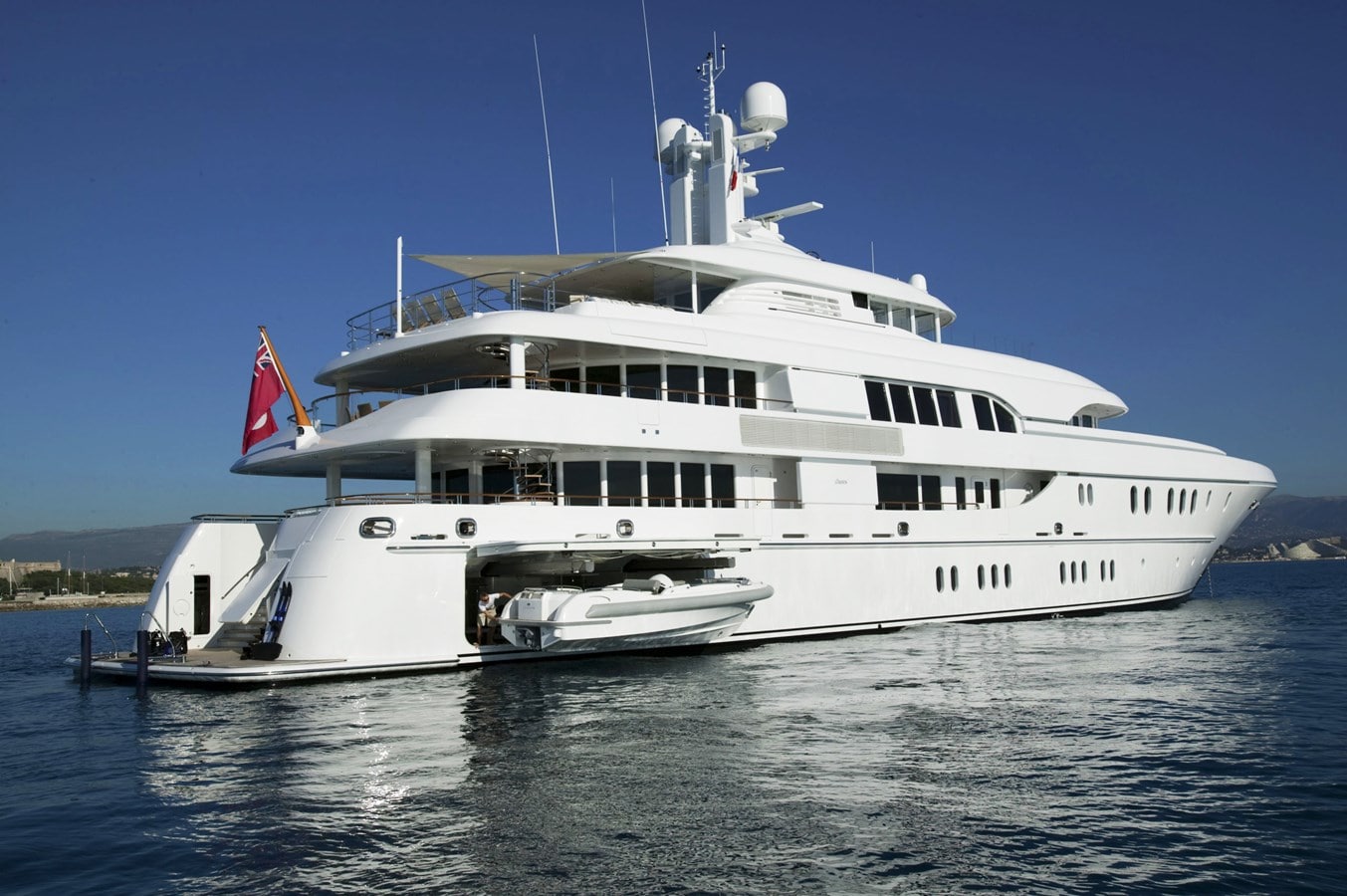
Buyers shopping in the 60-meter-plus market almost always land on the same question. Lürssen vs Feadship: which one actually fits how they want to own a yacht? Both shipyards sit at the top of the superyacht industry.
Yet they built their reputations on almost opposite priorities. Lürssen chases scale and engineering complexity. Feadship chases bespoke artistry and long-term craftsmanship. Neither approach is objectively better, and the right choice depends on what an owner values most.
Lürssen and Feadship are two of the world’s most respected superyacht builders, but they take different approaches. Lürssen specializes in scale and engineering, building some of the largest private yachts ever launched. Feadship focuses on bespoke craftsmanship and interior artistry, with build slots reserved years in advance.
Choosing between them shapes nearly every part of ownership. It affects purchase price, build timeline, resale value, and the kind of vessel you will actually live aboard. Buyers comparing Lürssen and Feadship are usually deciding between two ownership philosophies, not just two shipyards. Understanding how each performs on size, cost, design, and long-term value makes the decision easier before signing a purchase agreement or new-build contract.
Lürssen and Feadship: Two Different Philosophies of Superyacht Building
Lürssen started in Bremen, Germany, in 1875. A 24-year-old boatbuilder named Friedrich Lürssen opened a small yard on the Weser River. The company spent decades building fast boats and naval vessels alongside private yachts.
That engineering background never left the business. Today, Lürssen ranks among the few shipyards with the infrastructure to build private yachts over 100 meters.
Feadship formed in 1949, when a group of Dutch shipbuilders joined forces to sell custom yachts to the American market under one name. The group’s name reflects that original goal: First Export Association of Dutch Shipbuilders. Two of its founding yards, Royal Van Lent and Koninklijke De Vries, trace their own roots back to the 1800s. Their full origin story goes deeper than most buyers realize, and we’ve covered how Feadship evolved into a Dutch shipbuilding institution in a separate guide.
Those different starting points still shape how each yard operates. Lürssen takes on fewer projects, and many of them push the outer limits of size and technical complexity. Feadship builds a steadier volume of yachts in the 40 to 100-meter range, with owner involvement baked into the design process from the first sketch.
Lürssen’s early decades included building fast patrol boats and naval vessels for the German government. That work demanded precision engineering under real operational pressure. The heritage carried directly into the yard’s private yacht business, and it explains why Lürssen still leads on propulsion systems and structural engineering for extreme-size projects.
Feadship’s founding purpose ran the opposite direction. The group existed specifically to sell Dutch craftsmanship to wealthy American buyers after World War II. That mission pushed Feadship toward personalization and client relationships from day one, rather than raw technical capability.
How Lürssen and Feadship Compare Across Size, Price, and Build Time
Notable Yachts and Scale by Builder
Lürssen currently holds the record for the world’s longest private yacht with Azzam, launched at roughly 180 meters. The yard also built Dilbar, at around 156 meters, along with Topaz and Al Said. Few other shipyards can realistically compete for a commission at that scale.
Feadship’s largest deliveries sit closer to the 100-meter mark, led by Symphony at 101 meters. Most Feadship commissions land in the 50 to 90-meter range, where the yard’s reputation for bespoke detailing carries the most weight with buyers.
Price and Build Timeline Expectations
Pricing depends heavily on size and customization for both builders. Treat any figure here as a starting range, not a fixed number. Feadship’s fully custom commissions typically start around €35 million for a 40-meter yacht, with design development alone often running 18 to 24 months before steel gets cut.
Lürssen’s range stretches further at the top end. Its largest projects run into the hundreds of millions once full customization and complex engineering enter the picture.
| Category | Lürssen | Feadship |
|---|---|---|
| Founded | 1875, Bremen, Germany | 1949, Netherlands |
| Typical size range | 50m to 180m+ | 40m to 100m+ |
| Best known for | Scale and engineering complexity | Bespoke craftsmanship and interiors |
| Notable yachts | Azzam, Dilbar, Topaz | Symphony, Venus, Viva |
| Typical build timeline | 3 to 5+ years for full custom projects | 3 to 5 years, plus 18-24 months design phase |
| Starting price (full custom) | Tens of millions upward, scaling sharply with size | Roughly €35 million for a 40-meter commission |
The table above matters most where the two proposals actually overlap. That’s typically the 55 to 80-meter range, where both yards compete directly. In that window, price usually isn’t the deciding factor. It comes down to whether a buyer wants Lürssen’s engineering-first approach or Feadship’s design-first process shaping the build.
Hull output also differs between the two yards. Feadship typically delivers a handful of yachts per year across its four facilities, and each project gets close, hands-on supervision. Lürssen’s output varies more year to year, since a single 100-meter-plus commission can occupy the shipyard’s capacity for several years at a time.
Design and Craftsmanship: Where the Two Yards Truly Diverge
Interior Design Approach
Feadship’s interiors tend to reflect a close, ongoing collaboration between the owner and an outside design studio, refined over months of review before construction even begins. Venus, built for Steve Jobs and designed with Philippe Starck, is the clearest example.
Its minimalist, almost architectural interior looks nothing like a typical superyacht. That level of personalization comes close to a Feadship signature.
Lürssen also works with outside designers, including names like Espen Øino and Nuvolari Lenard. But the yard’s identity leans more heavily on capability than on how the interior looks.
Owners commissioning a Lürssen are often solving for range, stability, or onboard capability first. Design gets layered on top of that engineering foundation afterward.
Naval Architecture and Engineering Focus
Lürssen’s German naval heritage shows up directly in how it approaches propulsion and structural systems. The yard has led on diesel-electric propulsion and complex hull engineering, expertise that matters most for vessels operating reliably at extreme size.
Feadship’s naval architecture, handled in-house by De Voogt, focuses more on efficiency and long-term seaworthiness. Hybrid and low-emission propulsion have become a genuine differentiator across Feadship’s size range.
Construction methods reflect the same split. Lürssen typically builds steel hulls with aluminum superstructures, reinforced for long-range, heavy-displacement cruising, and several of its projects add ice-class strengthening for owners who actually use that range.
Feadship leans harder into weight-conscious engineering. The yard mixes steel and aluminum to keep speed and fuel efficiency competitive as its yachts grow toward the 100-meter mark.
If Oceanco’s design-forward approach is also on your shortlist, that’s a different comparison worth reading separately. We’ve broken down how Feadship stacks up against Oceanco, since that pairing raises different trade-offs than Lürssen does.
Resale Value and the Brokerage Market for Lürssen and Feadship Yachts
Resale Patterns by Builder and Segment
Feadship yachts generally hold their value well once they reach the brokerage market. That’s especially true after the five-year mark, when the initial depreciation curve flattens out. The reputation comes from consistent build quality and a buyer pool that specifically seeks out the brand.
Lürssen’s resale picture works differently because of scale. A 100-meter-plus Lürssen has a genuinely small pool of qualified buyers, simply because few owners can staff, berth, and operate a yacht that large. When a buyer does emerge for that segment, demand for a proven Lürssen build tends to be strong, since so few shipyards can deliver at that size at all.
In practice, resale strength depends more on the specific yacht’s size segment than on brand alone. A mid-size Lürssen competes in a much more liquid market than one of its flagship megayachts does.
Crew, Operating Costs, and the South Florida Market
A 55-meter Feadship might run with a crew of 12 to 15. A 100-meter-plus Lürssen typically needs 30 or more crew year-round, plus dedicated technical staff for its more complex systems. That gap matters just as much for the charter market as it does for private ownership, since larger Lürssen-built yachts command higher charter rates but also carry higher weekly operating overhead.
Fort Lauderdale has become a real operating hub for both brands. Lürssen maintains its own Americas sales office at Pier Sixty-Six, and Feadship-built yachts regularly move through South Florida’s brokerage market. Buyers researching Lürssen yachts for sale in Miami work with a market that has genuine local depth, not just global listings pulled from overseas brokers.
One honest trade-off deserves a direct call-out here. Operating costs scale up sharply once you move from a mid-size Feadship into a 100-meter-plus Lürssen. Crew size, fuel consumption, berthing fees, and refit costs all climb with length, so the “better investment” question depends heavily on which size segment you’re actually comparing.
Which Shipyard Fits Your Ownership Goals?
If Size and Engineering Scale Matter Most
Buyers chasing a genuinely record-setting vessel tend to gravitate toward Lürssen. The same goes for buyers who need extended range or demanding operating conditions. The yard’s technical depth makes it the realistic option once a project moves past roughly 80 meters.
If Bespoke Craftsmanship and Timeline Flexibility Matter Most
Buyers who want heavy involvement in interior design tend to lean toward Feadship. So do buyers who are comfortable with a multi-year design-and-build process. The yard’s reputation for personalization and resale strength makes it a common choice for owners planning to keep the yacht as a long-term asset.
Deciding between Lürssen vs Feadship ultimately comes down to what kind of ownership experience you want. It’s not about which shipyard is objectively “better.” A qualified yacht broker who has handled transactions with both builders can walk you through current inventory. They can also speak to realistic pricing for your size range and which brand’s resale patterns fit your ownership timeline.
Frequently Asked Questions
Which is bigger, Lürssen or Feadship yachts?
Lürssen builds the larger vessels overall, including Azzam, the world’s longest private yacht at roughly 180 meters. Feadship’s largest deliveries top out closer to 100 meters, with most commissions falling in the 50 to 90-meter range.
Is a Lürssen yacht more expensive than a Feadship?
It depends more on size than on brand. A mid-size Feadship and a similarly sized Lürssen often land in comparable price territory. Lürssen’s largest projects run well beyond what Feadship typically builds, though, which pushes the top end of its pricing significantly higher.
Which shipyard has better resale value, Lürssen or Feadship?
Feadship yachts tend to hold value consistently across their size range, especially after year five. Lürssen’s resale strength depends heavily on segment. Mid-size Lürssen yachts trade in a fairly liquid market, while flagship megayachts have a smaller, more specialized buyer pool.
Can you buy a used Lürssen or Feadship yacht through a broker?
Yes. Both brands regularly appear on the brokerage market. South Florida brokers routinely list and represent pre-owned vessels from both yards, including new and used Lürssen inventory.
How long does it take to build a new Lürssen or Feadship yacht?
Full custom projects from either yard typically take three to five years from contract to delivery. Feadship often adds 18 to 24 months of design development before construction even begins.
Do Lürssen and Feadship build sailing yachts too, or only motor yachts?
Both yards are primarily known for motor yachts. Each has produced select sailing and hybrid-propulsion projects over the decades, but motor yacht construction remains the core of both companies’ business today.
Ready to Compare Lürssen and Feadship Yachts for Sale?
Choosing between Lürssen and Feadship gets a lot easier once you’re looking at real, current inventory instead of general brand comparisons. At Miami International Yacht Sales, our yacht brokers work with buyers across both segments every day, from mid-size custom builds to full-scale megayachts. Contact Miami International Yacht Sales to speak with our yacht brokers about current Lürssen and Feadship listings.
