

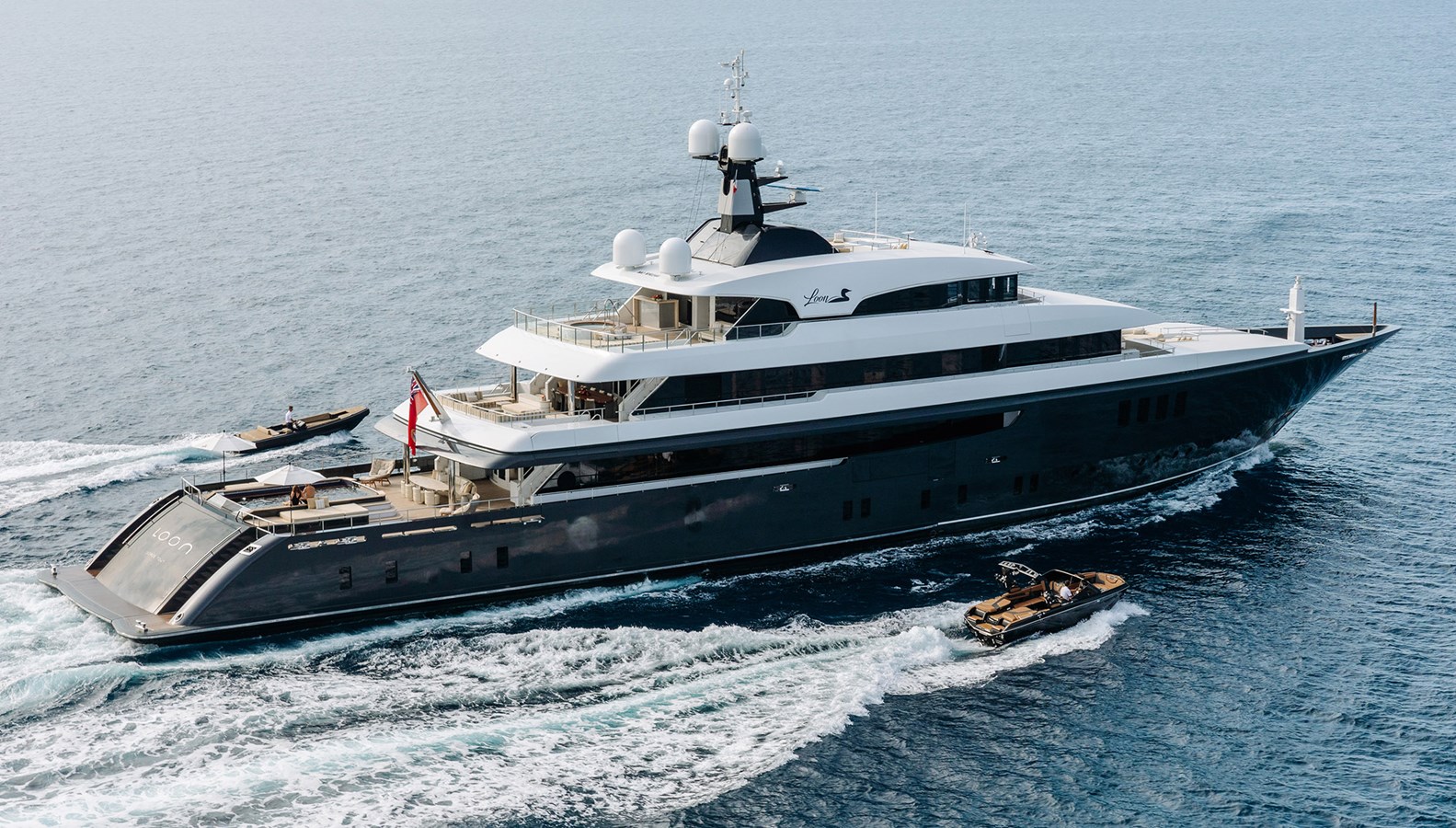
Burger Yachts for Sale: A Buyer's Guide to America's Original Custom Builder

By Robert Lama, President — Miami International Yacht Sales | Updated August 2026

Search “Burger yachts for sale” and most results look the same — filtered inventory pages sorted by price and length, with little explanation of what separates this builder from everything else on the market. That’s a problem if you’re weighing a 1980s Burger motoryacht against a modern explorer-style build. Which one actually fits how you’d use a boat? The answer isn’t obvious from a listing page alone.

Burger Boat Company has built yachts one at a time since 1863. That single fact changes how you should shop for one. This guide covers what the brand actually is, how the models differ, how Burger compares to other American and European custom builders, and what a broker checks before recommending a specific hull — including the specific due-diligence items that matter on a welded-metal yacht and nowhere else.

📞 Evaluating a Burger yacht in Miami? Call Robert Lama: +1-305-857-8939

What Is Burger Boat Company?

Burger Boat Company is an American custom yacht builder founded in 1863 in Manitowoc, Wisconsin by German immigrant Henry B. Burger. It is the oldest continuously operating custom yacht yard in the United States — and one of the few American builders that has never been acquired by a larger conglomerate or European group. That continuity of ownership matters to buyers in a specific way: original build records are traceable, and the yard maintains direct institutional knowledge of hulls it built decades ago.

Burger built its early reputation on wooden Mackinaw fishing boats for the Wisconsin fishing industry, then commercial schooners, and by the end of the 19th century was constructing the largest passenger steamships on the Great Lakes. The transition to pleasure yachts followed naturally — and two construction milestones define the brand’s technical identity:

  • 1938 — M/Y Tamaris (81 ft): One of the first American yachts with an all-welded steel hull — a structural innovation that gave the vessel durability that riveted-hull and early fiberglass contemporaries couldn’t match.
  • 1965 — M/Y Virginia: An early example of all-welded aluminum construction at this size — reducing topside weight while maintaining structural integrity in the underwater sections.

Those milestones still explain why long-range cruisers and expedition-minded buyers gravitate toward Burger today. Welded metal construction — properly maintained — produces yachts that outlast fiberglass production vessels by decades.

Burger currently employs approximately 350 skilled craftspeople at its Manitowoc facility and builds to order across its full range — from 15 meters (49 feet) to 80 meters (260 feet). Over 500 vessels have been launched since 1863.

Notable Burger Yachts — Significant Builds in the Fleet

Because no two Burger yachts are identical, understanding the brand means understanding specific vessels. These are among the most significant Burger builds that inform how the yard approaches a commission today:

Vessel Length Year Notable Feature Designer
Tamaris 81 ft 1938 First all-welded steel hull American yacht In-house
Virginia Custom 1965 Early all-welded aluminum construction In-house
Sis W Series Various Multiple Built for Walgreens pharmacy chain owners In-house
Sea Owl 143 ft (43.3m) 2009 Sylvan green hull; long-range explorer design Andrew Winch / Vripack
Sycara IV 151 ft (46m) 2009 Retro superyacht design; significant styling departure Ken Freivokh
IN-GOT 153 ft Recent Largest recent launch; helipad — first on a Burger In-house + external
TENACITY Custom Recent Long-range cruiser; 5,400 nm range at 12 knots In-house
INTERMISSION 101 ft (30m) Recent Compact superyacht with full explorer capability In-house

Sea Owl and Sycara IV represent the most publicly recognized recent Burger commissions — both produced in 2009 and both demonstrating Burger’s ability to collaborate with world-class external designers while maintaining in-house engineering and construction quality. For buyers evaluating the yard’s current capabilities, these vessels are worth researching in detail before engaging Burger for a commission.

Burger Yacht Models — Range by Era and Hull Type

Burger doesn’t run fixed production models the way brands like Ferretti or Azimut do. Its range is best understood by era and hull type, not a fixed lineup. Sizes have historically spanned roughly 45 feet to custom builds near 260 feet.

Classic Flybridge and Raised Pilothouse Motoryachts (1940s–1990s)

Many pre-owned Burger yachts on the market today are flybridge or raised-pilothouse motoryachts built between the 1940s and 1990s. These typically pair a steel hull with an aluminum superstructure — reducing topside weight while keeping the underwater structure durable. Owners who want a classic silhouette with genuine long-range capability tend to find this era appealing. A well-maintained 1970s or 1980s Burger with documented refit history often represents the strongest value proposition in the American custom yacht market.

Modern Explorer and Long-Range Builds (2000s–Present)

More recent Burger commissions lean toward explorer-yacht styling — taller freeboard, expedition-ready range, and interiors built for extended cruising. TENACITY, with a 5,400 nautical mile range at 12 knots, is a representative example of this direction. Modern Burger builds increasingly incorporate hybrid-ready engineering, advanced navigation systems, and interior specifications that reflect contemporary owner expectations without abandoning the structural philosophy that defines the brand.

Steel vs Aluminum — Understanding Burger’s Construction Materials

This is the question buyers ask most — and it has a direct answer that changes the operating and maintenance picture significantly.

Factor Steel Hull Aluminum Hull
Weight Heavier — lower center of gravity 30–40% lighter than equivalent steel
Stability Excellent — suits larger vessels Good — may require active stabilization
Corrosion risk Rust if coating fails — requires regular inspections Galvanic corrosion if mixed metals contact saltwater
Maintenance cost Higher — annual blasting and coating Lower in routine maintenance
Speed Slower — displacement hulls typical Faster — lighter weight allows higher speeds
Structural repair Straightforward — welders widely available Requires specialist aluminum welders
Longevity (maintained) 100+ years with proper maintenance 50–80+ years — lighter corrosion risk if anodes maintained
Best for Long-range passage making, larger vessels Speed + range balance, smaller expedition builds

Most pre-owned Burger yachts from the 1940s through 1990s use steel hulls with aluminum superstructures. This combination — heavier underwater, lighter above the waterline — is a deliberate engineering choice that reduces rolling tendency while keeping the center of gravity low. It is not a compromise; it is a considered specification that has proven itself across 80+ years of blue-water operation.

Burger vs Other Custom Yacht Builders — American and European Comparison

Buyers evaluating Burger typically compare it against two different peer groups: other American custom builders (Westport, Trinity) and European full-custom yards (Feadship, Heesen, Lürssen). These are genuinely different comparisons.

Burger vs American Custom Builders

Factor Burger Boat Company Westport Yachts Trinity Yachts
Founded 1863 — Manitowoc, WI 1964 — Port Angeles, WA 1988 — New Orleans, LA
Construction Steel / Aluminum (welded) Composite (fiberglass) Steel / Aluminum (welded)
Size range 49–260 ft 112–164 ft 130–200+ ft
Build approach Fully custom, one-at-a-time Production + semi-custom Fully custom
Service network Moderate — Midwest base Strong — Pacific Northwest Moderate — Gulf Coast
Lead time (new build) 2–4 years 12–24 months (semi-custom) 2–4 years
Best for Heritage, expedition, custom vision Proven production quality, faster delivery Large custom builds, Gulf access

Burger vs European Full-Custom Builders

Against Feadship, Heesen, and Lürssen, Burger occupies a different market position — typically lower cost per foot at equivalent size, with a distinctly American design sensibility and construction approach. Key differences:

  • Cost: Burger new builds typically cost 20–40% less per foot than equivalent Feadship or Lürssen commissions at the same size range
  • Design language: European yards favor current international design trends; Burger builds reflect a more individual, client-driven aesthetic
  • Resale market: European yards (Feadship especially) command stronger pre-owned premiums globally; Burger has a stronger resale market domestically in the US
  • Service access: European yards have established service networks in Mediterranean ports; Burger’s network is strongest in US East and Gulf Coast waters

For buyers who intend to cruise primarily in American waters — including Florida, the Bahamas, and the US East Coast — Burger’s domestic service infrastructure is a meaningful practical advantage over European yards whose service networks are optimized for Mediterranean and Northern European ports.

Pricing — Burger Yachts for Sale by Era and Size

Era Size Range Typical Pre-Owned Price Condition Caveat
Pre-1970 classic 45–80 ft $150K – $600K Refit history critical — hull survey essential
1970s–1980s flybridge 60–120 ft $400K – $3M Strong value if maintained; refit documentation key
1990s raised pilothouse 80–140 ft $1.5M – $6M Most liquid pre-owned segment — good parts availability
2000s–2010s modern 100–160 ft $4M – $15M Explorer builds command premiums; Sea Owl-era value
2015–present 80–160 ft $8M – $25M+ Limited supply; near-new condition
New custom build 49–260 ft $3M – $80M+ Priced individually by size and specification

Treat any specific number online as a starting point for negotiation, not a fixed figure. Condition and equipment vary enormously across a range this wide. A well-documented 1985 Burger with full engine overhaul and recent blasting may command a stronger price than a 2005 vessel with unclear maintenance records — which would be unusual in the European production-yacht market but is entirely normal in the American custom-build segment.

Buying a Used Burger Yacht vs Commissioning a New Custom Build

Factor Pre-Owned Burger Yacht New Custom Burger Build
Timeline Available now, pending survey and sea trial 2–4 years from commission to delivery
Cost predictability Fixed asking price, negotiable Can shift with material and equipment changes
Customization Limited to original specification Fully bespoke — layout, materials, systems
Condition risk Depends on maintenance and refit history New construction, minimal near-term mechanical risk
Service records Variable — request full documentation upfront Complete from day one
Best fit Buyers who want a proven hull and faster ownership Buyers with a specific vision and no urgency

In practice, most buyers who come to a broker already leaning toward a pre-owned Burger yacht want to be on the water within months, not years. They’re comfortable with a thorough survey standing in for the certainty a new build would offer. That’s a completely reasonable position — provided the survey is conducted by a marine surveyor experienced specifically with welded-metal construction.

What to Check Before Buying a Burger Yacht for Sale

Due diligence on a Burger yacht looks different from a standard fiberglass production-yacht inspection. The biggest mistake buyers make is applying a fiberglass-yacht checklist to a welded-metal hull. It doesn’t cover the same risks.

1. Hull and Corrosion Survey — Metal-Specific

Steel hulls need a thorough survey for corrosion — particularly at the waterline and at any point where the aluminum superstructure meets the steel hull. Dissimilar metals in saltwater accelerate galvanic corrosion once cathodic protection stops being properly maintained. Use a marine surveyor experienced with welded-metal construction specifically — not a generalist. Fort Lauderdale has a strong concentration of SAMS and NAMS-certified metal-hull specialists. Robert Lama at Miami International Yacht Sales can connect buyers with appropriate surveyors for any steel hull yacht or aluminum-hull Burger evaluation in the South Florida market. Burger boats for sale in this vintage require this specific expertise — the standard fiberglass survey checklist simply does not cover the same failure modes.

2. Coating System History

A steel hull requires regular blasting and recoating — typically every 5–7 years depending on operating area and barnacle conditions. Ask for the full coating history: when was the hull last blasted? What coating system was used? Was it done in a proper shipyard environment or at a dock? The answers tell you more about the vessel’s actual condition than the engine hours alone.

3. Engine Room and Machinery Condition

Burger yachts from the 1980s and 1990s typically run twin Detroit Diesel, Caterpillar, or MTU engines with 5,000–15,000 hours on original or overhauled powerplants. Verify overhaul records, fuel injection service history, and the condition of the seacocks, through-hulls, and stuffing boxes. On a steel hull, any rust staining near through-hull fittings warrants detailed investigation.

4. Refit Documentation

Ask for engine hours, refit history, and any structural work completed since the yacht was built. A well-documented refit history on an older Burger yacht matters more to long-term value than the build year alone. Some pre-1990 Burger yachts have had complete interior replacements and full engine overhauls — making them genuinely superior ownership propositions to newer vessels with unclear maintenance records.

5. Sea Trial

A sea trial on a vessel this size should cover more than a short dockside run. Verify: propulsion at full throttle and cruise throttle settings, steering response under load, stabilizer operation (if fitted), genset load testing, and anchor windlass. On older Burger yachts, vibration at cruise is worth particular attention — worn shaft cutlass bearings and out-of-balance propellers are common on vessels with high engine hours.

6. Registry and Documentation Check

Verify USCG documentation, any outstanding maritime liens, and the vessel’s current flag-state registration. On older Burger yachts that have changed ownership multiple times, documentation trails occasionally have gaps. A maritime attorney review of the bill of sale chain and documentation history is worthwhile on any transaction above $500,000.

South Florida — Burger Yacht Refit and Service Infrastructure

Miami and Fort Lauderdale are well-positioned for Burger yacht ownership from a service-infrastructure perspective — more so than most US markets outside of the Pacific Northwest and Gulf Coast.

Why South Florida works for Burger owners:

  • Metal-hull refit capacity: Port Everglades and surrounding yards handle steel and aluminum hulls regularly — unlike some smaller US coastal markets where fiberglass-only facilities dominate
  • Marine surveyors: Fort Lauderdale has a concentration of SAMS and NAMS-certified surveyors with metal-hull experience
  • Cruising range: Burger’s long-range hulls are naturally suited to Bahamas, Caribbean, and extended East Coast passages — all accessible from Miami
  • Annual Boat Show: Fort Lauderdale International Boat Show (October) and Miami International Boat Show (February) bring service vendors, equipment suppliers, and co-brokers to South Florida annually

For buyers considering a Burger yacht in South Florida, the practical question is not whether the infrastructure exists — it does — but whether you have access to the right specialists for the specific hull vintage you’re evaluating. Miami International Yacht Sales maintains active relationships with qualified metal-hull surveyors, maritime attorneys, and refit yards across the Fort Lauderdale and Miami corridor.

Is a Burger Yacht the Right Fit for You?

Burger yachts tend to suit a specific buyer profile:

Strong fit if you:

  • Value a one-off build history and genuinely individual ownership experience
  • Want genuine long-range cruising capability — 2,000+ nautical miles without refueling
  • Are comfortable with the additional due diligence a welded-metal hull requires
  • Plan to cruise primarily in US, Bahamas, and Caribbean waters where Burger’s domestic service network is strongest
  • Are buying pre-owned and want to evaluate a specific vessel’s history rather than a production model’s known characteristics

Less ideal if you:

  • Want a fast delivery from a production-model builder (Ferretti, Azimut, or Westport are faster options)
  • Plan to cruise extensively in European waters where Feadship and Lürssen service networks are stronger
  • Prefer the certainty of a well-known model with a large owner community and established resale market
  • Are not prepared to invest in the specialist survey and maintenance that a welded-metal hull requires

Burger yachts for sale represent one of the few remaining connections to a genuinely custom, one-at-a-time American shipbuilding tradition that predates the Italian and Dutch yards most buyers consider. The decision comes down to timeline, customization, and how much diligence you’re prepared to put into evaluating one individual vessel rather than a production model.

Where to Find Burger Yachts for Sale in Miami and Beyond

South Florida remains one of the strongest markets in the US for pre-owned Burger yachts. Miami and Fort Lauderdale-based brokers handle Burger transactions regularly — both through active YATCO and YachtWorld listings and through private off-market channels.

Pre-owned Burger yachts currently listed across major brokerage networks span a wide range. Smaller mid-century motoryachts often list well under $500,000. Larger, more recently refitted examples can reach into seven figures depending on age, size, and condition. YachtWorld lists approximately 25–30 active Burger listings at any given time — in sizes from 47 feet to 180 feet.

If you’re buying from outside Florida or outside the United States, the process carries additional steps covering documentation, survey scheduling, and delivery logistics. Miami International Yacht Sales handles used Burger yachts for sale as both listing broker and buyer’s representative — including off-market sourcing when no active listing matches a buyer’s specification.

Browse our current yacht listings to see what’s available, or contact Robert Lama directly to discuss your specific requirements.

Frequently Asked Questions — Burger Yachts for Sale

How much do Burger yachts for sale typically cost?

Pricing varies enormously by age, size, and condition. Pre-1970 classic motoryachts can list from $150,000–$600,000. 1980s–1990s raised pilothouse and flybridge models typically range from $400,000 to $6 million depending on size and refit quality. Modern explorer-style Burger builds from 2005 onward start from approximately $4 million and can reach $25 million+ for near-new examples. New custom builds are priced individually based on size and specification — from approximately $3 million at 50 feet to $80 million+ at larger scale.

Are Burger yachts built with steel or aluminum hulls?

Both, depending on the era and specific vessel. Burger pioneered all-welded steel construction with Tamaris in 1938 and all-welded aluminum construction with Virginia in 1965. Most pre-owned Burger yachts use a steel hull with an aluminum superstructure — a deliberate combination that reduces topside weight while maintaining structural durability in the underwater sections. Modern Burger commissions can be built in either material or a combination, depending on client requirements.

How long does a new custom Burger yacht take to build?

Custom builds typically take 2–4 years from commission to delivery, since each yacht is engineered individually rather than assembled from an existing design. Buyers should compare this against Westport (12–24 months semi-custom) and European full-custom yards (Feadship: 2.5–4 years; Oceanco: 3–5 years). If delivery timeline matters more than full customization, a semi-custom production builder will serve you better.

Where can I find used Burger yachts for sale in Miami?

South Florida is one of the strongest markets nationally for pre-owned Burger yachts — through general brokerage listings and through specialized brokers in the Miami and Fort Lauderdale area. Miami International Yacht Sales represents buyers and sellers of Burger yachts across South Florida and maintains off-market connections for buyers seeking specific hull sizes or vintages not currently on public platforms.

Do Burger yachts hold their value?

Well-maintained Burger yachts with documented refit histories hold value reasonably well within the American custom-build segment. Resale value depends more heavily on maintenance records and hull condition than age alone — a well-documented 1985 Burger in excellent condition can trade more strongly than a neglected 2005 vessel. In the broader custom-yacht market, Feadship and Lürssen command higher international pre-owned premiums, but Burger maintains a strong domestic US resale market that European yards cannot match.

What makes Burger different from Italian production yacht brands?

Burger builds custom, one-at-a-time vessels in welded steel or aluminum rather than standardized fiberglass production models. That means longer build timelines but a genuinely bespoke result, structural durability measured in decades rather than years, and a hull that can be properly repaired and maintained rather than one that becomes expensive to fix at the 15–20 year mark when osmotic blistering becomes a significant factor in fiberglass hulls. The trade-off is a smaller service network, more complex due diligence on pre-owned examples, and a more limited resale market compared to established Italian brands like Ferretti or Azimut.

What surveyor should I use for a Burger yacht inspection?

Use a marine surveyor with specific experience in welded-metal hull construction — not a generalist fiberglass-hull surveyor. Look for SAMS (Society of Accredited Marine Surveyors) or NAMS (National Association of Marine Surveyors) certification with metal-hull experience documented. In South Florida, several qualified metal-hull surveyors operate out of Fort Lauderdale. Robert Lama at Miami International Yacht Sales can refer appropriate specialists for any Burger hull evaluation in the South Florida market.

Can I buy a Burger yacht from outside the US?

Yes. Miami International Yacht Sales regularly works with international buyers acquiring US-built Burger yachts. The process involves USCG documentation review, vessel export procedures if applicable, and delivery logistics — all manageable through the right broker and maritime attorney network. Import duty (1.5%, uncapped) applies in reverse if a foreign buyer imports the vessel to their home country, though Burger yachts built in the US and sold to US buyers avoid this entirely.

How does a Burger yacht compare to a Feadship or Lürssen?

Burger and European full-custom yards (Feadship, Lürssen, Heesen) are genuinely comparable in construction quality and bespoke approach, but differ in three practical ways: Burger typically costs 20–40% less per foot at equivalent size; European yards have stronger Mediterranean and global service networks; and Feadship in particular commands stronger pre-owned premiums internationally. For a buyer who cruises primarily in US and Caribbean waters, Burger’s domestic service advantage and cost efficiency are compelling. For international cruising or buyers who prioritize European resale liquidity, Feadship is the stronger choice. See our full superyacht builder comparison for a detailed analysis.

Ready to Explore Burger Yachts for Sale in Miami?

If you’re weighing a pre-owned Burger yacht against a new custom commission — or comparing Burger against Westport, Trinity, or a European full-custom yard — the most valuable conversation you can have is with a broker who understands welded-metal construction and how to evaluate it against production alternatives.

Miami International Yacht Sales works with buyers and sellers across South Florida and internationally. We help source, survey, and negotiate Burger yachts for sale that match your budget and cruising plans — including off-market hulls that never reach public listing platforms. Every acquisition is handled personally by Robert Lama, IYBA-licensed Principal Broker, with 14+ years of specialist experience in the South Florida superyacht market.

Browse our current yacht listings or explore our guide to the top yacht brands in 2026 for a full market overview before reaching out.