

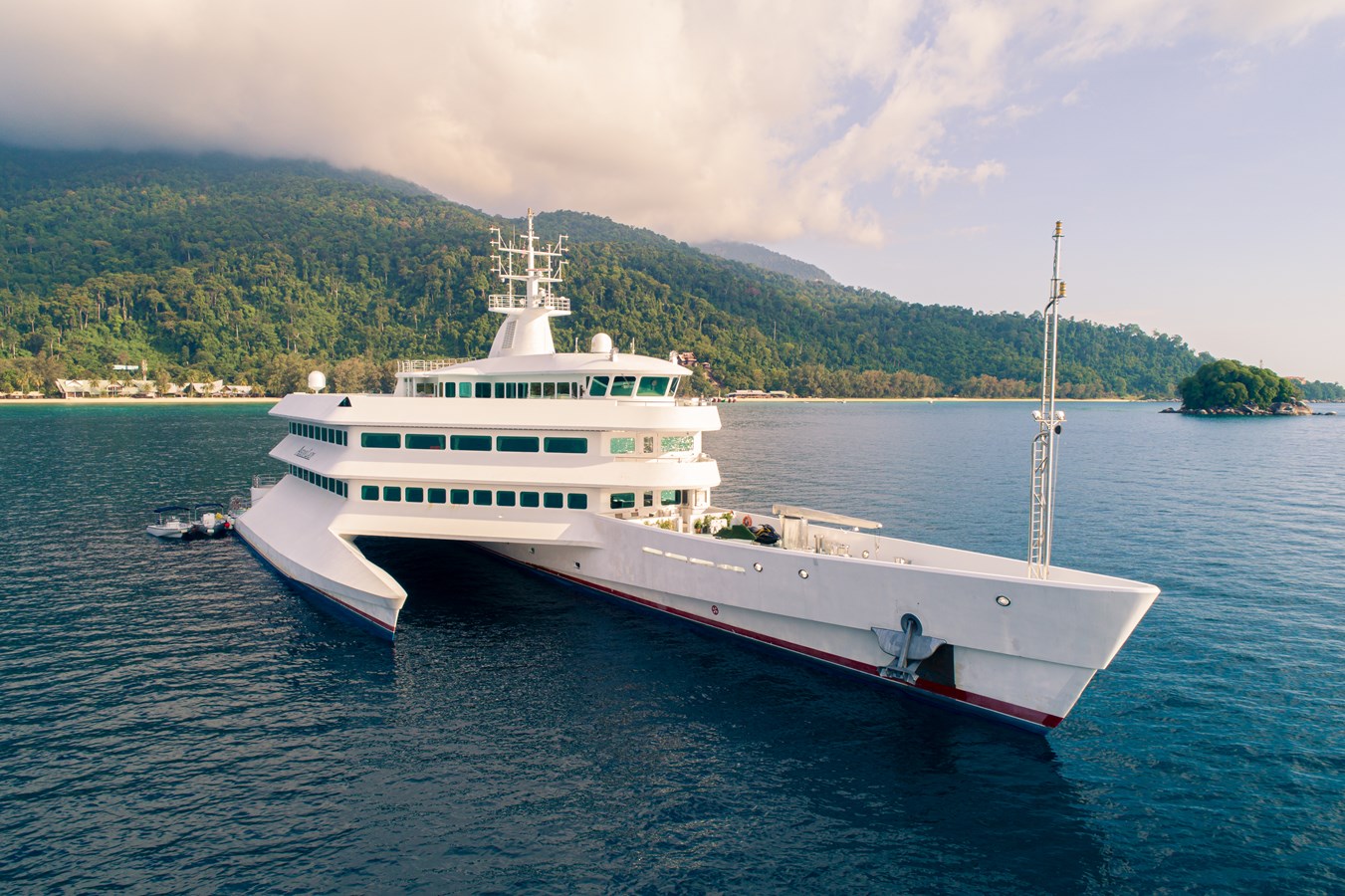
Anyone shopping for mega yachts for sale in Miami eventually asks the same question, usually after the excitement of the search wears off: what does it actually cost to keep one running? The purchase price is only the entry fee. The real financial commitment shows up every year after, in crew payroll, dockage, insurance, and the kind of maintenance that never makes it into a listing photo.
Most first-time buyers underestimate this by a wide margin, not because brokers hide it, but because the number depends on so many variables that no single figure tells the whole story. This guide breaks the real cost of ownership into its actual components, with typical ranges for each one, so you can budget with your eyes open before you sign anything.
Owning a mega yacht typically costs 10% to 15% of the vessel’s purchase price every year to operate. On a $10 million yacht, that generally works out to a typical range of $1 million to $1.5 million annually across crew, insurance, dockage, fuel, and maintenance. The exact figure depends heavily on the yacht’s size, age, usage pattern, and home port.
That range holds true whether the yacht is brand new or a well-maintained pre-owned vessel, though older yachts often shift spending toward maintenance and repairs rather than crew or insurance. Buyers based in Miami face a few additional variables that owners in colder climates don’t, from hurricane season logistics to marina availability during peak season. Knowing the typical range for each category matters more than fixating on one total figure.
The 10% Rule Every Buyer Should Know First
Most experienced yacht brokers in Miami and yacht managers use a simple shorthand with new buyers, often called the 10% rule: annual running costs typically land somewhere between 10% and 15% of the yacht’s current value. It’s a rule of thumb, not a guarantee, and it exists because owners consistently ask for a starting point before they’ve even chosen a specific vessel.
That percentage isn’t evenly split across categories. Crew alone commonly accounts for 30% to 40% of total operating costs on a professionally crewed yacht, while insurance typically runs 0.5% to 2% of the vessel’s value annually. Maintenance and refit costs swing the most, since a five-year-old yacht in excellent condition can cost meaningfully less to run than a similarly sized yacht that’s overdue for a refit.
In practice, what catches new owners off guard isn’t the total percentage, it’s how front-loaded certain expenses are. Insurance premiums, dockage contracts, and crew salaries are due whether the yacht leaves the marina once a year or every weekend. Fuel and discretionary maintenance are the only categories that scale meaningfully with actual usage.
Crew Is Usually the Single Largest Ongoing Expense
For any yacht large enough to require a professional crew, salaries typically represent the biggest recurring cost of ownership, often outweighing insurance, dockage, and fuel combined. A captain, engineer, stewardess, and deckhand are the baseline for most mega yachts, and larger vessels add chefs, additional deckhands, and sometimes a dedicated officer or engineer.
Salary ranges vary widely by role and experience. Captains on larger mega yachts commonly earn somewhere between $80,000 and $300,000 or more annually, while other professional crew typically fall in a $50,000 to $150,000 range each, depending on their position and seniority. A modest crew of four to six on a mid-size mega yacht can easily add up to several hundred thousand dollars a year once salaries, benefits, and training are combined.
Crew costs aren’t just salaries. Owners are typically responsible for health coverage, paid leave, training certifications, uniforms, and travel between assignments. A crew that’s stayed with the same yacht for several seasons tends to run more efficiently and knows the vessel’s quirks, which is one reason experienced owners budget for retention rather than treating crew as a line item to minimize.
The common mistake here is assuming a smaller crew saves money in any meaningful way. Understaffing a large yacht usually shows up later as deferred maintenance, slower turnarounds, and higher turnover, all of which cost more to fix than the salary saved in the first place.
Insurance, Dockage, and the Fixed Costs You Can’t Avoid
Insurance for a mega yacht is priced differently than a standard boat policy. Premiums typically fall between 0.5% and 2% of the vessel’s insured value each year, with the exact rate shaped by the yacht’s age, cruising range, crew experience, and claims history. A yacht that spends hurricane season in South Florida waters generally carries a different rate than one based year-round in the Mediterranean. This is one area where understanding how yacht insurance is actually structured before you buy can prevent an unpleasant surprise after closing.
Dockage is the other fixed cost that catches out-of-state buyers off guard. Florida marina rates for large yachts commonly range from roughly $30 to $120 per foot per month depending on the marina and season, and premium slips during peak winter months can run considerably higher when demand spikes. Owners who buy without confirming dockage first sometimes end up paying a premium just to secure a spot near their home base.
Together, insurance and dockage are the two costs least affected by how much the yacht is actually used. They’re due on a fixed schedule regardless of whether the owner spends three weekends or three months aboard each year, which is part of why they belong in a different budgeting bucket than fuel or discretionary maintenance.
Maintenance, Refits, and the Expenses First-Time Owners Underestimate
Routine maintenance, engine servicing, hull cleaning, and system checks are predictable and usually get budgeted correctly by first-time buyers. Depending on the yacht’s size, routine upkeep typically runs somewhere in the low six figures annually, before anything unexpected comes up. What surprises most new owners is the periodic refit, the multi-year haul-out where major systems, paint, and interior finishes get restored to keep the yacht competitive on resale value.
A refit isn’t optional in the way some owners assume it is, and on a larger mega yacht it can easily run into seven figures depending on the scope of work. Skipping or delaying one doesn’t eliminate the cost, it just defers it and usually makes the eventual bill larger, since deferred issues tend to compound. Yachts on a consistent maintenance and refit schedule also tend to hold resale value better, which matters if selling is ever part of the long-term plan. Our own overview of the less obvious costs behind operating a superyacht goes deeper into which expenses tend to get missed in early budgeting.
The honest trade-off here is worth stating plainly: a newer yacht costs more upfront but usually carries lower near-term maintenance exposure, while an older yacht can be a genuinely smart buy, but only if the maintenance history is clean and the buyer has already budgeted for a refit sooner rather than later.
Why Miami Changes the Math
Buying and running a mega yacht from Miami isn’t identical to doing it from Fort Lauderdale, Newport, or the Mediterranean. Hurricane season alone adds a layer most first-time buyers don’t plan for, since haul-out scheduling, storm prep, and insurance terms around named storms all factor into the annual cost picture and can nudge premiums toward the higher end of the typical range.
On the upside, Miami’s position as a major yachting hub means access to experienced crew, marine technicians, and provisioning services is generally strong, which can offset some of the seasonal complexity. Buyers exploring our current mega yachts and superyachts for sale in Miami often ask about this trade-off directly, and it’s one worth discussing with a broker who works the local market day to day rather than a generalist.
Import duties, state tax treatment, and residency status can also shift the real cost of ownership for international buyers. That’s a separate conversation from day-to-day operating expenses, but it belongs in the same budget discussion before a purchase closes rather than after.
Building a Realistic Ownership Budget Before You Buy
The most useful way to approach this isn’t a single number, it’s a framework. Before making an offer, experienced buyers typically map costs into three buckets: fixed costs that are due regardless of usage, variable costs that scale with how the yacht is actually used, and periodic costs that hit every few years rather than annually.
| Cost Category | Type | Typical Annual Range |
|---|---|---|
| Crew salaries & benefits | Fixed | 30%–40% of total operating costs |
| Insurance | Fixed | 0.5%–2% of vessel value |
| Dockage & marina fees | Fixed | $30–$120 per foot per month, Florida average |
| Routine maintenance | Variable | Low six figures, scaling with size and age |
| Fuel | Variable | Varies widely with usage and cruising range |
| Refits & haul-outs | Periodic (every 5–7 years) | Can run into seven figures on larger yachts |
Consider two similarly sized motor yachts of comparable age and specification, one with a consistent, documented maintenance history and one that’s changed hands a few times without clear records. On paper, a generic cost estimate might treat them the same. In practice, the well-maintained yacht tends to land toward the lower end of the typical range, while the one with gaps in its history often needs a compressed maintenance and refit schedule that pushes early-year costs well above what a simple percentage estimate would suggest.
Mapping expenses this way also makes it easier to compare two different yachts realistically, since a lower purchase price on an older vessel can be offset entirely by a refit that’s coming due within the first year or two of ownership. It changes the conversation with a broker from “what will this cost me” to “which bucket is this specific yacht going to be expensive in.”
There’s no single dollar figure that answers what it costs to own a mega yacht, and any source offering one exact number without context is oversimplifying the picture. What matters is understanding the typical range for each category, fixed, variable, and periodic, and how a specific yacht’s age, size, and usage pattern will land within each one. Buyers who approach the mega yachts for sale market with that framework in mind tend to negotiate better, budget more accurately, and avoid the surprises that can turn an exciting purchase into a stressful one.
Frequently Asked Questions
Is it cheaper to own an older mega yacht than a new one?
Not necessarily. An older yacht usually has a lower purchase price, but that gap can close quickly if a refit or major system replacement is coming due soon after purchase. The honest answer depends more on documented maintenance history than on age alone.
Do smaller mega yachts cost proportionally less to run?
Generally yes, since crew size and dockage requirements scale down with vessel size, but the relationship isn’t perfectly linear. Fixed costs like insurance and a baseline crew don’t shrink as fast as the yacht itself does.
How much does crew turnover affect ownership costs?
More than most new owners expect. Recruiting, training, and onboarding new crew takes time and money, and a yacht with frequent turnover often sees more deferred maintenance than one with a stable, experienced crew aboard.
Does chartering the yacht help offset ownership costs?
For some owners, yes, industry estimates suggest charter income can recover a meaningful share of annual expenses depending on demand, though it adds its own complexity around crew licensing, insurance terms, and wear from more frequent use. It’s worth discussing directly with a broker rather than assuming it automatically pays for itself.
What’s the biggest cost mistake first-time mega yacht buyers make?
Budgeting only for the purchase price and routine maintenance while leaving out the periodic refit. It’s consistently the largest expense new owners fail to plan for in the first few years of ownership.
Should Miami’s hurricane season factor into my ownership budget?
Yes. Storm prep, seasonal haul-out scheduling, and insurance terms tied to named storms are recurring costs that owners based outside hurricane-prone regions simply don’t have to account for.
Get a Cost Picture Built Around the Yacht You’re Actually Considering
Every yacht carries a different cost profile, and the only way to move from typical industry ranges to real numbers is to talk through a specific vessel with someone who knows it well. Miami International Yacht Sales works with buyers throughout the entire mega yacht buying process, from narrowing down the right size and brand to understanding what a particular vessel will realistically cost to run. Contact us to talk through your budget against our current inventory, and one of our brokers will walk you through the specifics before you commit to anything.
