

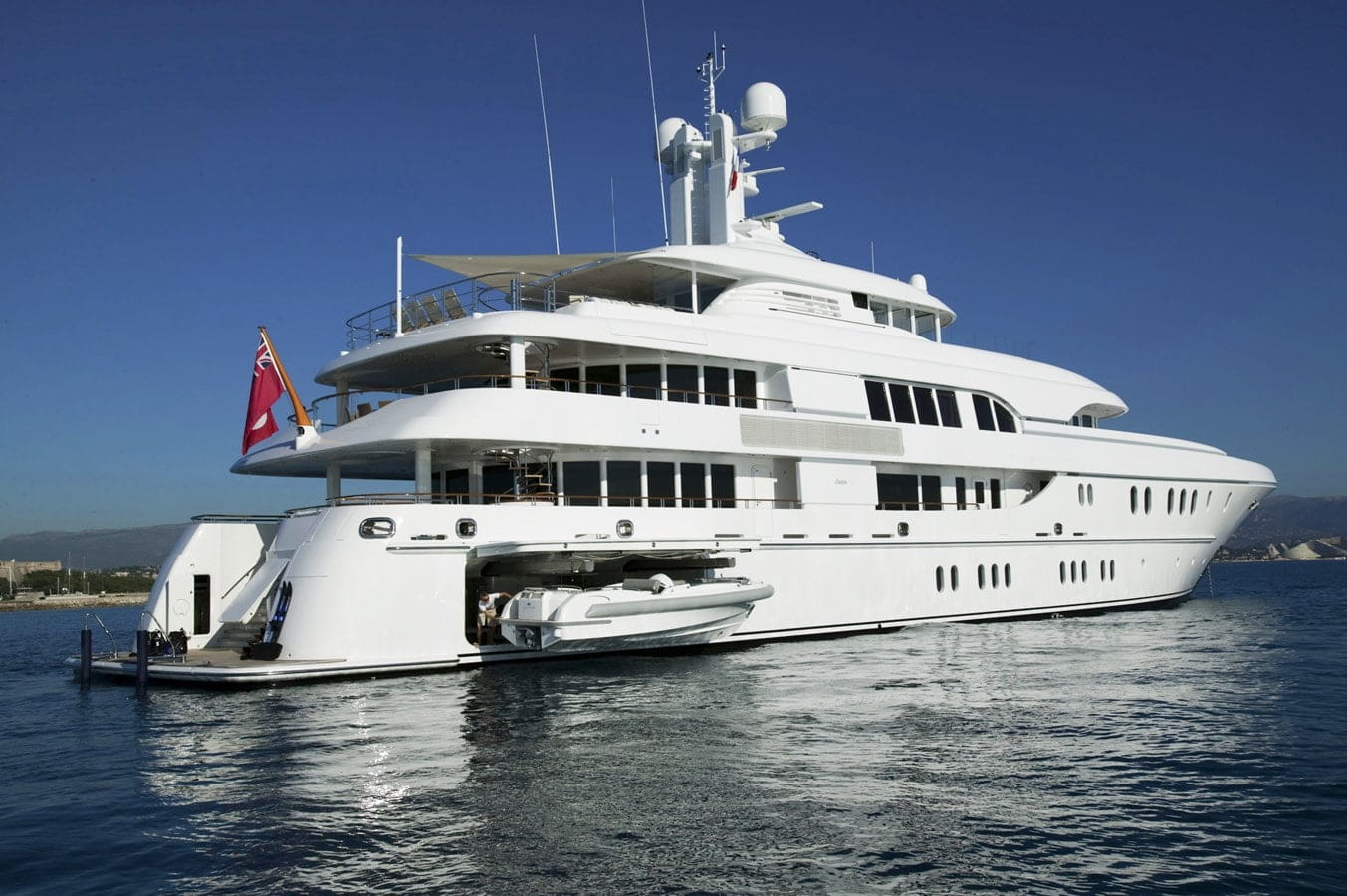
Before you sign a purchase agreement on any yacht, two independent processes stand between you and a costly mistake: the marine survey and the sea trial. This guide covers yacht survey cost per foot, the three types of marine surveys, who pays, what every serious buyer should test on a sea trial, and how the results feed your final acceptance decision.
At Miami International Yacht Sales, IYBA-certified broker Robert Lama has managed hundreds of these transactions across vessel sizes ranging from 40-foot sportfish to 150-foot superyachts. The protocols in this guide are what our team uses every time a buyer puts a multimillion-dollar vessel under contract in Miami or Fort Lauderdale.
The Three Types of Marine Surveys — and Which One Buyers Need
Not all marine surveys are the same. The type you order depends entirely on the transaction. A buyer’s pre-purchase survey has a fundamentally different scope than the survey an insurance underwriter requires when you renew your policy. Understanding the difference protects you from paying for a survey that does not actually serve your purpose.
Pre-Purchase Survey (Most Common for Buyers)
Ordered by the buyer before closing. A certified marine surveyor from NAMS (National Association of Marine Surveyors) or SAMS (Society of Accredited Marine Surveyors) physically inspects the vessel and prepares a detailed condition-and-value report covering both seaworthiness and fair market value. This is the survey most buyers mean when they say “get a survey.”
- Hull integrity and structural condition
- Engine room, machinery, and steering systems
- Electrical systems and ABYC compliance
- Safety equipment and through-hull fittings
- Fair market value assessment for negotiation
Insurance Survey (Required by Lender or Insurer)
Ordered by an underwriter before issuing or renewing a marine insurance policy. Typically less exhaustive than a pre-purchase survey; it focuses on safety compliance and insurable value rather than mechanical wear or investment-grade condition assessment. It usually does not include an engine inspection.
Out-of-Water Survey (Most Thorough)
The industry standard for any serious pre-purchase inspection on a vessel over 30 feet. The yacht is hauled at a boatyard, allowing the surveyor full access to the running gear, underwater hull, keel bolts, shafts, and propellers — all completely invisible from the dock or in the water.
- Bottom paint condition and osmotic blistering
- Propeller, shaft, and rudder inspection
- Through-hull fittings and seacocks tested under load
- Keel attachment hardware and hull-to-deck joint
- Running gear alignment verified
MIYS Buyer Tip: For any vessel over 40 feet, insist on an out-of-water survey combined with a separate engine survey. Defects found below the waterline are typically the most expensive to repair — and the most dangerous to miss. See our mega superyacht inventory and ask our team which surveyor to use for your specific vessel type.
Yacht Survey Cost Per Foot: What Buyers Actually Pay in Florida
Marine surveyors price their work primarily by the vessel’s overall length (LOA). Whether you call it a boat survey cost per foot, a marine survey cost, or simply the survey fee — the structure is consistent across the industry. Florida sits in a mid-to-upper range nationally because of the vessel sizes involved and the density of NAMS- and SAMS-certified surveyors concentrated in South Florida’s brokerage market.
According to data compiled by Boatzon (2026), pre-purchase survey fees in the Florida market run approximately $25 to $40 per foot for most cruisers and motor yachts, with full condition-and-value surveys on larger yachts reaching $35 to $45 per foot. The hull survey itself is only part of your total outlay — haul-out, engine surveys, and fluid analysis each add to the final number.
| Vessel Length | Hull Survey | Haul-Out | Engine Survey (per engine) | Approx. Total |
|---|---|---|---|---|
| 35 ft Motor Yacht | $875–$1,400 | $350–$700 | $500–$1,000 | $1,725–$3,100 |
| 50 ft Motor Yacht | $1,750–$2,000 | $500–$1,000 | $500–$2,000 | $2,750–$5,000+ |
| 75 ft Mega Yacht | $2,625–$3,375 | $750–$1,500 | $1,000–$2,000+ | $4,375–$6,875+ |
| 100 ft Superyacht | $3,500–$4,500 | $1,000–$2,000+ | $1,500–$4,000+ | $6,000–$10,500+ |
Estimates based on Florida market rates of $25–$45/foot (hull survey) per Boatzon (2026). Engine survey rates are per engine — twin-screw vessels require two. These are estimates only; your MIYS broker will obtain formal quotes from certified surveyors.
On a $1.5M superyacht, a comprehensive survey package at $8,000–$10,000 represents less than 0.7% of the purchase price. Defects that a survey catches — osmotic hull damage, worn shafts, underperforming generators — routinely justify price reductions of $50,000 or more. The marine survey cost is almost always the best-spent money in the entire transaction.
Who Pays for the Survey — and What Happens After the Report?
The buyer pays for the marine survey, with no exceptions under standard IYBA (International Yacht Brokers Association) contract terms. The survey is a due-diligence expense for the buyer, not a seller disclosure obligation. Here is how the full sequence works from signed offer to acceptance.
Step 1 — Signed Purchase Agreement
The buyer and seller execute a purchase and sale agreement (typically the IYBA standard form). The agreement specifies a survey and sea trial period — usually 10 to 30 days. During this window, the buyer has the right to survey and sea trial the vessel, and to accept or reject based on findings.
Step 2 — Survey and Sea Trial Scheduled
The buyer (or their MIYS broker) selects a NAMS- or SAMS-certified marine surveyor. The seller’s captain coordinates a haul-out date at a boatyard and a sea trial date. Both events typically happen on consecutive days. The buyer pays the surveyor directly; the seller pays haul-out fees unless the purchase agreement specifies otherwise.
Step 3 — Survey Report Delivered
The surveyor delivers a written condition-and-value report within a few days of the inspection. The report lists deficiencies categorized by severity — safety items (must be corrected), recommended repairs, and cosmetic observations. The fair market value stated in the report is a key negotiating reference point.
Step 4 — Acceptance, Renegotiation, or Walk-Away
Under IYBA contract terms, the buyer has three paths: Accept the vessel as surveyed; Renegotiate the price or request repairs for identified defects; or Reject the vessel and receive a full refund of their deposit — with no obligation to explain the reason. The survey period protects the buyer completely.
Want to understand how brokers coordinate the full transaction? Read our guide on how yacht sales are managed from both sides — covering listing, offer, survey, and closing.
What a NAMS-Certified Marine Surveyor Actually Does
A certified marine surveyor does far more than a visual walkthrough. The techniques used on a serious pre-purchase survey — especially for a vessel over 40 feet — are non-destructive but highly diagnostic. Understanding what these methods detect tells you exactly what your marine survey cost is buying.
Percussive Sounding
The surveyor systematically taps the hull with a specialized phenolic hammer and listens for changes in resonance. A sharp, crisp sound indicates solid fiberglass; a dull thud or hollow sound reveals internal delamination or a water-saturated core — damage completely invisible to the eye from either side of the hull.
Calibrated Moisture Meters
Electronic moisture meters scan the transom, deck coring, and stringer grid to detect hidden water intrusion deep within the laminate layers — long before osmotic blisters appear on the gel coat. High moisture readings in key structural areas allow buyers to negotiate a price reduction or commission targeted fiberglass repairs before closing.
Thermal Imaging
Infrared cameras are deployed across the main electrical panels while the vessel is running under load. This highlights overheating circuits, loose grounding wires, and overloaded breaker switches that a standard visual inspection misses entirely. Electrical fires are among the most common causes of vessel loss — thermal imaging makes them preventable.
NMEA 2000 Network Check
Modern yachts operate on a digital backbone that links the chart plotter, radar, autopilot, and engine sensors on a single unified network. The surveyor verifies the NMEA 2000 architecture is correctly installed, checks for galvanic corrosion on data port connections, and confirms all multifunction display firmware is current.
Seacocks and Through-Hull Fittings
Every through-hull fitting and seacock is physically operated to confirm it opens and closes smoothly. A seized, corroded, or brittle seacock can crack under water pressure and sink the vessel. ABYC-certified surveyors verify that all bronze or Marelon valves are compliant with current marine safety standards and are properly backed.
Engine Oil Analysis
Fluid samples taken at the end of the sea trial — when the oil is fully mixed and at operating temperature — are sent to an independent laboratory for spectrographic analysis. Elevated copper indicates worn bearings; sodium in the oil signals saltwater intrusion; excess iron points to accelerated cylinder wear. These results carry significant negotiating weight.
The Complete 10-Step Yacht Sea Trial Checklist for Mega Yachts
The sea trial is not a demonstration cruise. It is a forensic audit of the vessel’s engineering and livability conducted under real operating conditions. Whether you call it a yacht sea trial checklist or a boat sea trial checklist, the protocol should be identical: systematic, documented, and conducted before the purchase agreement becomes binding. The following 10-step process is what IYBA broker Robert Lama uses when stress-testing multimillion-dollar assets on behalf of MIYS buyers in Miami and Fort Lauderdale. Each step surfaces a specific category of defect that a dockside survey cannot reveal.
1. Cold Start Inspection
Arrive 30–45 minutes before scheduled departure and place your hand near the engine blocks. They must be cold — a pre-warmed engine hides old seals that leak when cold, and batteries that cannot turn over a stiff diesel block. Watch exhaust at the moment of ignition: blue smoke indicates burning oil, suggesting worn valve guides or piston rings. White smoke that lingers can indicate coolant intrusion from a compromised head gasket.
In the world of luxury yachts for sale in Miami, reliability is the ultimate luxury. If a yacht struggles to start at the dock, it will undoubtedly fail you when you are anchored in a remote bay in the Exumas.
2. Marina Maneuverability Test
The sea trial begins the moment lines are cast. Hydraulic bow and stern thrusters should deliver robust, consistent thrust — a high-pitched whine or fluctuating power signals air in the hydraulic lines or a pump that is on its way out. Gearbox engagement from neutral to forward should be smooth, never clunky. A violent shift clunk on a yacht of this size is a transmission problem that runs into serious repair costs.
3. RPM Ladder and Engine Load Analysis
In open water, run the yacht at stepped RPM intervals (1,000 / 1,200 / 1,500 / 1,800+) and record vibration levels at each step. Every hull has a resonant frequency — if cups migrate at a specific RPM, suspect a bent prop shaft, damaged propeller, or misaligned engine mounts. At cruising speed, monitor coolant temperature across a full hour: the Heat Soak test is particularly revealing in warm South Florida waters. Finally, perform a Wide Open Throttle (WOT) run — the vessel must reach its rated top RPM from the engine manufacturer (MTU, CAT, MAN). Falling short by 100+ RPM indicates a loaded bottom, wrong propeller pitch, or engine performance decline.
4. Zero Speed Stabilization Test
Modern buyer expectations require stability both underway and at anchor. Test the stabilization system in two stages: first, disengage it in a beam sea and re-engage — correction should be instant and smooth. Then perform the Champagne Test: stop the vessel in choppy water, engage zero-speed mode, and place a half-filled glass on a hard surface. Minimal liquid movement confirms a properly sized and calibrated system. A rocking glass means the system is undersized or needs software recalibration.
5. Electrical Grid Load Test (Peak Hotel Load)
Simultaneously activate every air conditioning unit, all galley appliances (oven, induction tops, dishwasher, ice maker), water heaters, underwater lights, and entertainment systems. Watch the voltage and frequency meters on the main switchboard for stability. Flickering lights or a hunting generator under combined load means the generator is undersized or aging. Then test the auto transfer switch — switching generator load from Unit 1 to Unit 2 should be seamless with zero power interruption to running equipment.
6. Noise and Vibration Measurement
Bring a decibel meter. Take readings in the master stateroom at cruising speed with the door and windows closed. The acceptable range: 45–50 dB (library-quiet, excellent build quality); 55–60 dB (normal conversation, acceptable); above 65 dB (poor, will affect sleep quality over extended voyages). Listen specifically for high-pitched whine from the prop shafts and fan noise from HVAC — in many production yachts, the air handling is louder than the main engines.
7. Crew Flow and Service Path Evaluation
Walk the service paths from galley to main saloon to flybridge while the vessel is underway. The best mega yachts for sale maintain complete invisibility between crew and guest circulation — dedicated service stairs and pantry access allow food and beverage delivery without crossing guest spaces. Inspect the laundry room for size, ventilation, and access. Ask the crew to launch the tender during the trial: a crane that struggles under load, or a jet ski lift that binds, signals deferred maintenance on systems the owner uses daily.
8. Anchor System Full-Deploy Test
Do not spot-test the windlass with a short drop. Take the vessel to depth and deploy the full chain length — this reveals the condition of the bitter end (the final links closest to the anchor chain locker, which rarely surface and often corrode first). When recovering, the hydraulic windlass must retrieve the anchor at a steady pace without overheating or slowing as the anchor breaks suction at the surface. A failing windlass on a vessel of this displacement is a serious offshore safety liability.
9. System Redundancy Review
Ask the captain to walk you through backup systems: secondary freshwater pump, redundant steering pump, backup fuel transfer pump, emergency bilge systems. A yacht engineered for extended blue water passages will have a redundant path for every critical system. A vessel with single-point failure on freshwater, steering, or bilge pumping is not suitable for offshore use, regardless of how recently primary systems were serviced.
10. Post-Trial Fluid Analysis
The sea trial does not end at the dock. Within 30 minutes of returning to the marina, draw oil samples from the main engines, generator, and transmission. These samples go to an independent laboratory for spectrographic analysis. High copper indicates worn bearings; sodium signals saltwater contamination inside the crankcase; elevated silicon suggests dirt is bypassing the air filtration. This scientific evidence can support a significant price reduction negotiation or, if severe, become the basis for rejecting the vessel under the IYBA contract survey clause.
Ready to put a yacht under contract? Schedule your expert consultation.
Yacht Survey and Sea Trial: Frequently Asked Questions
How much does a yacht survey cost per foot?
In the Florida market, pre-purchase surveys on motor yachts and superyachts typically run $25 to $40 per foot, with larger or more complex vessels reaching $35 to $45 per foot for a full condition-and-value survey. This covers the hull survey only — haul-out charges (typically $10–$20/ft), engine surveys ($500–$2,000 per engine), and fluid analysis are additional line items. Source: Boatzon, 2026.
Who pays for the yacht survey?
The buyer pays for the pre-purchase survey — always. Under standard IYBA (International Yacht Brokers Association) contract terms, the survey and sea trial period is the buyer’s due diligence phase, and all costs associated with it are the buyer’s responsibility. The seller typically pays haul-out fees unless the purchase agreement specifies otherwise.
What happens during a yacht sea trial?
A professional sea trial is a 10-step operational audit: cold start inspection, marina maneuverability test, RPM ladder and engine load analysis, zero-speed stabilization test, peak hotel electrical load test, noise and vibration measurement, crew flow evaluation, anchor system full-deploy test, system redundancy review, and post-trial fluid analysis. The sea trial runs 3–6 hours for most vessels over 50 feet.
Can I back out of a yacht purchase after the survey?
Yes. Under the standard IYBA purchase agreement, the buyer has the unilateral right to reject the vessel during the survey and sea trial period and receive a full refund of their deposit — no reason required. If defects are found, you have three options: accept the vessel as-is, renegotiate the purchase price or request repairs, or reject the vessel and walk away. The survey contingency is one of the strongest buyer protections in any large asset purchase.
Do I need an engine survey in addition to the hull survey?
Yes, for any vessel with diesel main engines over approximately 500 hours or any vessel over $300,000. A hull surveyor inspects the engine room visually but does not perform a compression test, injection system test, or spectrographic oil analysis — those require a certified marine diesel mechanic. Engine survey costs run $500–$2,000 per engine. On twin-screw yachts, budget for two.
What is an out-of-water survey and do I need one?
An out-of-water survey requires the vessel to be hauled at a boatyard so the surveyor can inspect the underwater hull, through-hull fittings, shafts, rudders, propellers, and keel attachment. For any vessel over 30 feet, it is industry standard. Without a haul-out, the surveyor cannot assess the condition of the bottom, running gear, or seacocks — all of which can carry significant defects that remain completely hidden in the water.
How long does a yacht survey take?
A pre-purchase survey on a 50-foot motor yacht takes approximately 4–6 hours for the out-of-water hull inspection and another 3–5 hours for the sea trial — typically spread over two consecutive days. A 100-foot superyacht requires 2–3 full days for a comprehensive survey and sea trial package. The surveyor usually delivers the written report within 3–5 business days of completing the inspection.
Work With Miami International Yacht Sales on Your Survey and Sea Trial
A brochure can list horsepower and leather types, but only a rigorous survey and sea trial reveal the soul of a vessel. At Miami International Yacht Sales, we do not just accompany you on the sea trial. IYBA-certified broker Robert Lama manages the entire process — surveyor selection, haul-out coordination, report interpretation, and post-survey negotiation — so you close at a price that accurately reflects the vessel’s true condition.
Questions about the survey and sea trial process for a specific vessel? Contact our team at +1-305-857-8939 or bob@MiamiYS.com. Or explore Miami yacht charters if you want hands-on experience with a vessel type before committing to purchase.
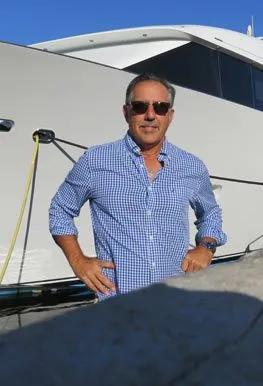
Robert Lama is the founder and principal broker of Miami International Yacht Sales, an IYBA-member luxury yacht brokerage based in South Florida. With over 13 years of experience in 100’–250′ class superyacht transactions, Robert has facilitated multi-million dollar acquisitions and new builds with leading shipyards in Italy and the Netherlands. His background in Commercial Real Estate in New York gives him a unique edge in complex yacht deal structuring and negotiation.