

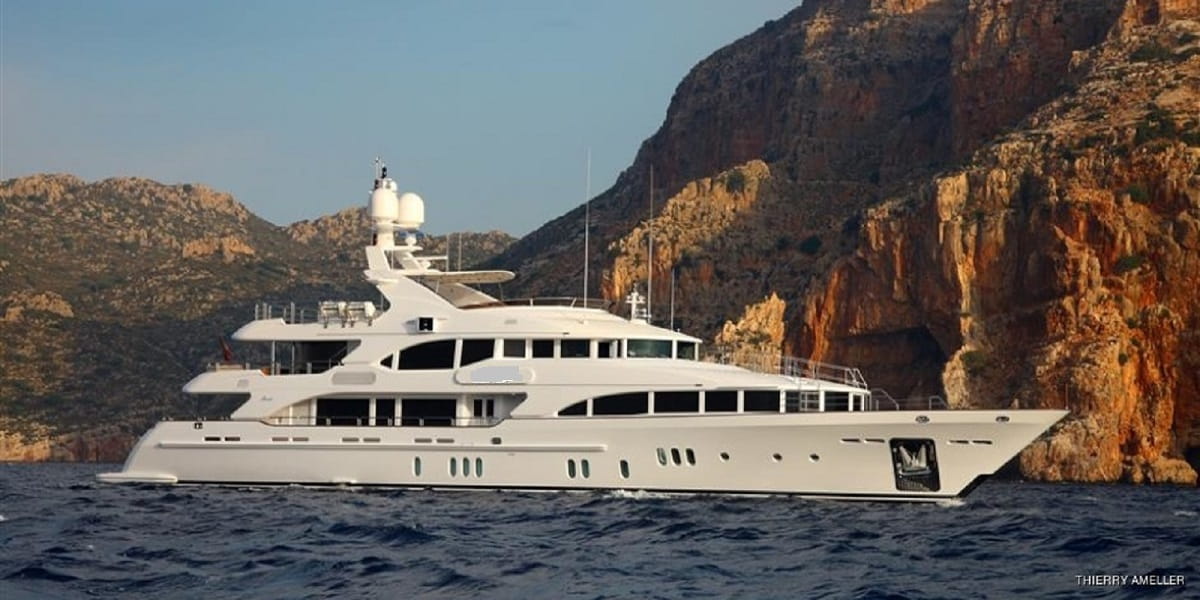
For the global yachting community, Miami is not just a destination. It is the marketplace. Whether you are a buyer from Europe seeking a specific Sunseeker hull or a client from Latin America upgrading to a Ferretti for Caribbean cruising, the inventory of yachts for sale in Miami is unrivaled.
However, purchasing a high-value asset in the United States as a non-resident involves a complex web of logistical, tax, and legal considerations that differ significantly from buying domestic real estate. The difference between a smooth transaction and a bureaucratic nightmare often comes down to one thing: strategy.
At Miami International Yacht Sales, we specialize in international yacht sales. We understand that for our global clients, the goal is not just to acquire a vessel, but to structure the ownership in a way that preserves capital, ensures privacy, and guarantees the freedom to cruise.
This guide details the specific mechanics of buying a yacht in Florida as a foreign national, from avoiding the 6% sales tax to securing the golden ticket of cruising licenses.
The Tax Question: Do I Have to Pay Florida Sales Tax?
This is the first question every international client asks our Miami yacht brokers. The headline Florida sales tax rate is 6% (plus a discretionary county surtax), which is capped at $18,000 for the state portion. While $18,000 is a relatively low cap compared to European VAT, most international buyers prefer to legally exempt themselves from this tax entirely.
If you are a non-resident of Florida, you have three primary legal pathways to avoid paying sales tax on your purchase.
Option A: The Fly-Away Exemption (Pure Export)
If you plan to purchase the vessel and immediately export it to your home country (or another cruising ground outside Florida), you can utilize the standard removal exemption.
- The Rule: You have 10 days from the date of purchase to physically remove the boat from Florida waters.
- The Repair Extension: If the vessel requires repairs or upgrades to be seaworthy for the voyage, we can place the vessel in a registered repair facility. You then have 20 days after the repairs are completed to leave.
- The Proof: You must provide fuel receipts and dockage logs proving the vessel left the state.
Option B: The Sojourner’s Permit (90-Day Decal)
Most buyers want to enjoy their new yacht in Miami for a season before shipping it home. Florida law allows this through the Sojourner’s Permit.
- How it Works: As a non-resident, you can purchase a decal for a minimal fee that allows the vessel to remain in Florida waters tax-free for 90 days.
- The Extension: You may purchase one 90-day extension, granting you a total of 180 days of cruising in Florida.
- The Hard Stop: You must leave Florida waters before the 181st day. If the boat is still at a Miami dock when the permit expires, you are liable for the full use tax, retroactive to the purchase date, plus mandatory penalties.
Option C: The Offshore Closing
This is the most common strategy for high-value used yachts for sale in Miami. To ensure the transaction is not subject to Florida tax jurisdiction, the transfer of ownership (title) and funds occurs in international waters.
- The Atlantic Rule: The vessel must sail at least 3 nautical miles offshore (into federal/international waters).
- The Process: A representative from our Miami yacht brokerage, a notary, and the captain take the vessel out. Once the GPS confirms the coordinates, the documents are signed, and the wire transfer is released. The vessel then returns to Miami as a foreign-owned asset in transit.
Flagging and Registration: The Foreign Flag Strategy
A common misconception among international buyers is that if you buy a boat in Miami, you should register it in the United States. In reality, US Coast Guard (USCG) Documentation is generally reserved for U.S. citizens.
As a non-resident, you cannot secure USCG Documentation unless you utilize a complex corporate structure where a U.S. citizen holds the majority interest (the 75/25 rule). Instead, the superior strategy for most international clients is Foreign Flagging.
The Red Ensign Group
We frequently assist clients in registering their vessels in Red Ensign jurisdictions such as the Cayman Islands, the British Virgin Islands (BVI), or the Isle of Man.
- Resale Value: These registries are universally respected and maintain high resale value for the vessel.
- Privacy: They offer robust privacy protections for the beneficial owner.
- Speed: Registration can often be expedited to match the closing timeline of new yachts for sale in Miami.
The Marshall Islands
The Marshall Islands registry is another top-tier option, particularly favored by U.S.-based owners of foreign yachts due to its strong diplomatic ties with the U.S. and efficient processing.
Get Confidential Buying Advice!
The Cruising License: Your Ticket to U.S. Waters
If your yacht is flying a Cayman or BVI flag, how do you cruise in Miami? You cannot simply sail into Biscayne Bay without protocol. You need a U.S. Cruising License.
A Cruising License is a document issued by U.S. Customs and Border Protection (CBP) that allows a foreign-flagged pleasure vessel to cruise U.S. waters freely for up to one year.
- The Benefit: Without this license, you would be required to physically report to Customs and clear in at every single port you visit. With the license, you report your movement by phone/app, offering seamless travel from Miami to the Keys or up to New England.
- The Restriction (Crucial): A vessel on a Cruising License is strictly forbidden from engaging in trade. This means you cannot charter the boat to paying passengers in U.S. waters.
- The Sale Restriction: You generally cannot offer a foreign-flagged vessel for sale to U.S. residents while it is in U.S. waters unless you have paid the import duty (approx. 1.5%). If you see listing ads that say “Not for sale to U.S. residents while in U.S. waters,” this is why.
Navigating the Inventory: The Pocket Listing Advantage
The market for used yachts for sale in Miami moves with incredible velocity. By the time a high-demand vessel (like a late-model Viking or a Sunseeker 76) appears on public websites, it is often already under contract.
This is where the relationship with your broker becomes your greatest asset.
- Pocket Listings: Top Miami yacht brokers maintain internal lists of off-market yachts—owners who are ready to sell but prefer not to list publicly for privacy reasons.
- International Reach: At Miami International Yacht Sales, our network extends beyond Florida. We often source vessels that are currently in the Mediterranean but are owned by sellers looking to liquidate quickly in the USD market.
The Financial Logistics: Banking and Escrow
For international buyers, moving large sums of capital across borders requires compliance with Know Your Customer (KYC) and Anti-Money Laundering (AML) regulations.
- Use a Dedicated Escrow: Never send funds directly to a seller. We utilize dedicated client escrow accounts or third-party maritime attorneys to hold deposits. This ensures your capital is protected until all contingencies (survey, sea trial, clear title) are met.
- Currency Timing: If you are converting Euros or Pounds to USD, the timing of the exchange can impact your final price by thousands. We recommend working with foreign exchange specialists who can lock in rates prior to the closing date.
Post-Purchase: Insurance and Crewing
Once you own the yacht, the logistics shift to management.
Insurance in the Hurricane Zone
Insuring a yacht in South Florida is becoming increasingly specialized due to hurricane risks.
- The Box: Many insurers require vessels to be moved out of the hurricane box (certain latitudes) during peak storm season (August–October), or to be hauled out of the water and strapped down.
- Foreign Flag Insurance: Insurance carriers are very comfortable with Cayman or BVI-flagged vessels, provided the captain has the requisite licensure.
Crew Visas
If you plan to keep the yacht in Miami, your crew will need the appropriate visas.
- B1/B2 Visas: Most foreign crew operate on B1/B2 visas.
- Rotational Crew: Miami is a hub for crew. We can connect you with staffing agencies that specialize in placing bilingual crew members familiar with the specific demands of international owners.
Conclusion
Buying a yacht in Miami as a non-resident is a gateway to the best cruising grounds in the Americas, from the Exumas to the Florida Keys. But the transaction requires more than just a willing buyer and seller; it requires a structural strategy.
Don’t let the legalities dampen the excitement of your purchase. Whether you are looking for new yachts for sale in Miami or searching for a refit project among the used yachts for sale in Miami, our team is equipped to handle the global nuances of your purchase.
Frequently Asked Questions (FAQ)
Q: Can I keep my foreign-flagged yacht in Miami year-round?
Yes, but you must manage your import status. You can keep the vessel here under a Cruising License for one year. After that year, the vessel must leave U.S. waters (physically go to a foreign port like Bimini) for at least 15 days before a new license can be issued. You also have the option to legally bring the boat into the country by completing a formal import and paying a 1.5% duty, which allows you to keep it permanently. However, you will still likely need to exit for immigration reasons depending on your visa.
Q: Is it safe to buy a boat in Miami without seeing it?
We never recommend buying without a survey. However, for our international clients, we often conduct the initial video walkthrough and hire a trusted local surveyor to perform the hull and engine analysis before the client flies in for the final sea trial. This saves you a trip if the boat doesn’t meet standards.
Q: What is the difference between a Miami Yacht Broker and a Dealer?
A Miami yacht brokerage acts like a real estate agency, we represent you, the buyer, and can show you any boat on the market (used or new brokerage). A dealer typically represents a specific manufacturer (like Azimut or Ferretti) and is incentivized to sell their specific stock. As brokers, our loyalty is to your interests, not the shipyard’s inventory.
Q: Do I need a U.S. bank account to buy a yacht in Miami?
No. You can wire funds directly from your foreign bank to the escrow account of the brokerage or the maritime attorney handling the closing. However, be prepared for standard AML (Anti-Money Laundering) documentation requests.
Q: Can I offset my costs by chartering my yacht when I’m not using it?
This is complicated for foreign-flagged vessels due to the Jones Act. In short, you cannot simply list your boat for day charters in Miami. A foreign-flagged vessel cannot carry paying passengers between two U.S. points. However, you can offer your yacht for Demise Charter (also known as Bareboat Charter). In this arrangement, the charterer (guest) takes full legal responsibility for the vessel and hires the crew separately. This is a strict legal structure that must be set up correctly to avoid massive fines. Alternatively, many of our clients choose to base their charter program in the Bahamas (just 50 miles away), where the regulations for foreign-flagged charter vessels are different.
Q: Can I get a loan for the yacht if I don’t have a U.S. credit score?
Yes, but traditional U.S. banks (like Bank of America or Wells Fargo) will likely turn you down. You will need to work with specialized marine lenders who offer Asset-Based Lending. These lenders focus on the value of the yacht and your global liquidity/net worth rather than a FICO score. Be prepared to put down a higher deposit (typically 35-40%) and provide proof of funds from your home country.
Turn Complex Logistics into Smooth Sailing with MIYS
Buying internationally requires more than a handshake; it demands a waterproof strategy. You’ve read the rules, now let us execute them for you. At Miami International Yacht Sales, we bridge the gap between your dream vessel and the legal realities of cross-border ownership. We don’t just hand you the keys; we coordinate the offshore closings, manage the flagging registration, and secure the cruising permits that keep you compliant.
Don’t risk a tax penalty or a customs delay by navigating these waters alone. Whether you are eyeing a new build or a high-value used vessel, our team is ready to represent your interests with the discretion and precision global buyers demand.
Ready to secure your asset? Contact us at +1-305-857-8939 or send us your email to bob@MiamiYS.com for a confidential consultation on your specific tax and cruising requirements. Let’s make your purchase as seamless as your next voyage.
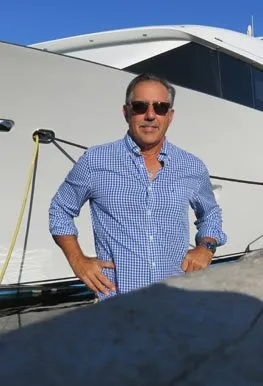
Robert Lama is the founder and principal broker of Miami International Yacht Sales, an IYBA-member luxury yacht brokerage based in South Florida. With over 13 years of experience in 100’–250′ class superyacht transactions, Robert has facilitated multi-million dollar acquisitions and new builds with leading shipyards in Italy and the Netherlands. His background in Commercial Real Estate in New York gives him a unique edge in complex yacht deal structuring and negotiation.