

Last Updated: November 2026 | By Robert Lama, President — Miami International Yacht Sales
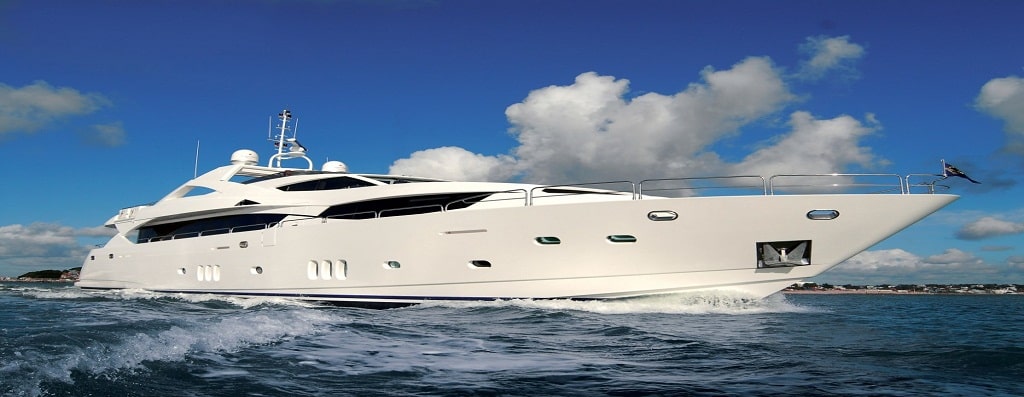
When buyers come to us asking about Sunseeker’s sustainability story, the conversation usually starts with a vague question about “going green.” It rarely stays vague for long. Sunseeker’s move into hybrid propulsion is not a marketing repositioning — it is a documented engineering shift backed by a commercially available production yacht, a third-party energy partnership with published figures, and a 2024 industry innovation award. What most buyers haven’t had explained to them yet is how this translates into what they actually experience on the water, and what it means for a purchase decision in 2026.
What is a Sunseeker hybrid yacht?
A Sunseeker hybrid yacht combines a conventional diesel propulsion system with an integrated electric drive, allowing the vessel to operate across multiple power modes — including fully electric at low speeds and near-silent operation at anchor. The first production-class Sunseeker hybrid is the 50M Ocean, powered by MTU’s series-production hybrid system, the first of its kind in a Sunseeker build.
The hybrid configuration on the 50M Ocean is not a one-mode system. MTU’s integration gives it six distinct operating modes: standard cruise, power, maneuver, battery charge while underway, silent propulsion for up to three hours on electric power alone, and a silent anchor mode that can hold for up to seven hours without running the main engines. For buyers who spend time in protected marine areas, anchored in bays, or simply value nighttime quiet on board, those two silent modes are the most practically significant features in the entire spec sheet.
How Sunseeker’s Hybrid System Differs From Other Luxury Yacht Manufacturers
The luxury yacht market has no shortage of sustainability announcements. Feadship’s Project Breakthrough is developing a liquid hydrogen propulsion system, with sea trials underway in 2025. Lürssen has built Nausicaä with methanol fuel cell technology, and Damen’s hydrogen-ready vessels have attracted attention in the commercial and expedition segment. These are genuine engineering achievements — but they are custom or low-volume builds, with price points and lead times that price out the overwhelming majority of the global superyacht market.
What Sunseeker has done differently is deliver a hybrid system within a production-line context. The MTU hybrid fitted to the 50M Ocean is described by MTU as the company’s first series-production hybrid system deployed in a yacht of this class. That distinction matters for buyers. Series production means documented service networks, predictable maintenance costs, and the ability to source parts and expertise at marinas worldwide — none of which applies to experimental custom hydrogen or methanol builds at this stage.
The 50M Ocean’s hull compound adds another layer of differentiation. Sunseeker uses a Fast Displacement Hull Form (FDHF) on the 50M Ocean that is 15 to 20% more fuel-efficient than a conventional planing hull at equivalent speeds. Add the optional Hull Vane passive fin system, which reduces fuel consumption by up to 30% at cruising speeds by recovering stern wave energy, and the efficiency gains compound beyond what the hybrid drivetrain alone achieves. Most competitors in this size range are still optimizing diesel-only hull designs.
Sunseeker 50M Ocean: Six Operating Modes in Practice
Understanding the six MTU hybrid modes is not just a spec exercise — each one maps to a real cruising scenario. This is worth knowing before viewing the vessel or comparing it against conventionally powered alternatives in the same size range.
Silent propulsion mode draws entirely on the battery bank, delivering up to three hours of fully electric transit at reduced speeds. For leaving a marina early morning in a residential waterway, entering an anchorage in a protected nature reserve, or approaching a swim stop without engine noise, this is the mode that changes the experience most noticeably. Three hours is a meaningful range for inshore and coastal passages, though it is not designed for open-ocean crossings.
Silent anchor mode is the other standout. Running air conditioning, lighting, refrigeration, and onboard systems for up to seven hours without starting the main engines is a significant quality-of-life and environmental improvement over conventional genset operation. Many owners report that nighttime noise from generators is one of the top comfort complaints on longer trips — this mode addresses it directly.
Power and cruise modes operate the conventional diesel system in the same performance envelope buyers expect from a 50-metre superyacht. The hybrid does not constrain top speed or range when the diesel is engaged. Charge mode allows the battery bank to recharge underway, so the vessel arrives at anchor with full electric capacity ready.
One trade-off worth acknowledging honestly: the hybrid system adds weight relative to an equivalent diesel-only build, and the battery bank requires additional maintenance consideration over the vessel’s service life. Battery capacity will degrade somewhat over years of use, as it does in any lithium-based system. For buyers planning heavy blue-water passages where fuel range is the primary concern, the conventional diesel version of the platform may be the more practical fit. The hybrid configuration is most valuable for owners who mix coastal cruising with anchored stays in sensitive or residential areas.
| Feature | Sunseeker 50M Ocean Hybrid | Conventional 50m Diesel Superyacht |
|---|---|---|
| Propulsion system | MTU hybrid (diesel + electric) | Diesel-only |
| Operating modes | 6 (incl. 2 silent modes) | 1–2 (cruise/power) |
| Silent propulsion | Up to 3 hours electric-only | Not available |
| Anchor noise | Silent up to 7 hours (electric) | Genset required for hotel load |
| Hull efficiency | FDHF: 15–20% more efficient | Conventional planing hull |
| Fuel reduction option | Hull Vane: up to 30% at cruise | Not standard |
| Maintenance complexity | Higher (battery + diesel) | Lower (diesel-only) |
| Series production | Yes (MTU series system) | Yes |
Sunseeker’s Shore-Side Sustainability: The AMP Clean Energy Partnership
Propulsion is only part of Sunseeker’s sustainability position. The less publicized aspect — and the one that speaks most directly to E-E-A-T questions about whether this is marketing or substance — is what Sunseeker has done with its manufacturing operations in Poole, UK.
In a 20-year agreement with AMP Clean Energy, Sunseeker converted its Poole facilities to biomass-generated heat and power. The combined system has a capacity of 1.5 megawatts and uses waste timber feedstock — including approximately 1,360 tonnes of timber waste diverted from landfill annually — to fuel the production process. The published headline figures from that partnership: 1,200 tonnes of CO2 saved per year, and roughly £100,000 in annual energy cost reductions versus the prior fossil-fuel heating system.
These figures are third-party sourced from AMP Clean Energy’s own reporting on the partnership, not Sunseeker marketing materials. That distinction matters for buyers evaluating whether the brand’s sustainability narrative holds up to scrutiny. For a brokerage that sources its inventory from Sunseeker’s UK production, being able to point clients to independently documented emission reductions rather than marketing language is a meaningful difference in credibility.
Ocean 156: What the 2024 World Yacht Trophies Innovation Award Signals
The World Yacht Trophies 2024 gave Sunseeker its Innovation Trophy for the Ocean 156. This is not a popular-vote award or a dealer recognition program — the World Yacht Trophies are judged by an independent panel drawn from the international yachting media and industry, and the Innovation category specifically evaluates advances in design, engineering, or technology that move the market forward.
The Ocean 156 is not a hybrid in the same sense as the 50M Ocean. It is powered by twin MAN V12 diesels and delivers speeds of 22 to 25 knots across its 1,770 square feet of interior space. The award reflected the vessel’s overall design and structural innovation rather than its propulsion system specifically. That context matters: Sunseeker’s eco-friendly credentials are not dependent on a single drivetrain technology. The brand is being recognized for the full scope of how it builds — materials, hull design, weight distribution, and long-term platform efficiency — not exclusively for hybrid or electric drive.
For buyers considering Sunseeker yachts for sale in the 100-to-156-foot range, this award is a useful reference point. It indicates that the Ocean series has been evaluated independently and found to represent a step forward in its class — not just a larger version of an existing platform.
What Miami Buyers Should Ask Before Purchasing a Sunseeker Hybrid Yacht
South Florida’s cruising environment makes the hybrid proposition particularly relevant. Miami, the Keys, Biscayne Bay, and the Bahamas are all areas where quiet operation at anchor and reduced fuel consumption on short inter-island passages align well with what the 50M Ocean delivers. The absence of genset noise overnight in an anchorage like Warderick Wells or off a Bahamian cut is not a minor convenience — it changes the character of the trip.
When evaluating a Sunseeker hybrid, the questions worth asking are specific. First, what is the current state of the battery bank and how many charge cycles has it logged? Unlike a diesel engine, which shows wear through fluid analysis and mechanical inspection, a hybrid battery requires a different pre-purchase inspection protocol. Any competent marine surveyor with hybrid experience should be able to run a capacity test alongside the standard survey.
Second, how has the vessel been operated? A hybrid owned by someone who primarily used diesel mode and rarely engaged the electric modes is not the same as one that has had its full hybrid system exercised regularly. Battery systems benefit from regular full-cycle use — a yacht that has sat on a dock with the hybrid side dormant may show different battery health than one that has been actively cruising.
Third, confirm the available service infrastructure for the MTU hybrid system in the ports the vessel will primarily visit. MTU has a substantial global dealer network, and Miami specifically has qualified MTU service providers. That coverage holds across most major Caribbean and Bahamian ports as well, though it is worth verifying for any extended cruising program outside the main marina hubs.
As a Sunseeker brokerage in Miami with years of experience placing buyers into these vessels, our team has worked through these inspection and specification questions on multiple transactions. The hybrid evaluation process is more involved than a standard diesel pre-purchase, but it is well within the scope of what a thorough survey should cover. We can walk buyers through what to expect and ensure the survey team has the right hybrid-specific checklist.
Interested in Viewing a Sunseeker Hybrid Yacht in Miami?
Frequently Asked Questions: Sunseeker Hybrid Yachts
Does Sunseeker make a hybrid yacht?
Yes. Sunseeker’s 50M Ocean is powered by MTU’s series-production hybrid system, the first of its kind in a production-class Sunseeker build. It operates across six modes, including up to three hours of fully electric propulsion and up to seven hours of silent anchor operation running on battery power without the main engines running.
How fuel-efficient is the Sunseeker 50M Ocean hybrid?
The 50M Ocean uses a Fast Displacement Hull Form (FDHF) that is 15 to 20% more efficient than a conventional planing hull. With the optional Hull Vane passive fin system, additional fuel consumption reductions of up to 30% at cruise speeds are achievable. Combined with the electric-only operating modes, the vessel’s overall fuel consumption profile is significantly lower than a comparably sized conventional diesel superyacht.
What is the range of the electric-only mode on the Sunseeker 50M Ocean?
In silent propulsion mode, the 50M Ocean can operate on electric power alone for approximately three hours at reduced speeds. The silent anchor mode extends electric-only operation to up to seven hours for hotel loads — air conditioning, lighting, and onboard systems — without running the main engines. These modes are designed for coastal, inshore, and anchorage use rather than extended offshore passages.
What is Sunseeker’s environmental record outside of the 50M Ocean?
Sunseeker’s 20-year partnership with AMP Clean Energy has converted its Poole, UK manufacturing facilities to biomass-generated heat and power, saving approximately 1,200 tonnes of CO2 per year and diverting around 1,360 tonnes of timber waste from landfill annually. These are independently documented figures from the AMP Clean Energy reporting on the partnership, not internal marketing claims.
Is a Sunseeker hybrid yacht worth it for Miami and Bahamas cruising?
South Florida and the Bahamas are well-suited to a hybrid yacht’s strengths. Short inter-island passages, sensitive marine environments, residential anchorages, and protected bays all align with where the 50M Ocean’s silent operating modes add the most value. For buyers who primarily cruise in these conditions, the hybrid configuration is a genuine operational advantage rather than a theoretical one. For heavy blue-water offshore sailing, a conventional diesel build may remain the more practical choice.
How does the Sunseeker hybrid compare to Feadship or Lürssen eco-friendly builds?
Feadship’s hydrogen propulsion development and Lürssen’s methanol fuel cell work represent the leading edge of sustainable superyacht technology, but both are low-volume or prototype-stage builds with custom pricing. Sunseeker’s hybrid system is a production-class MTU series build, available through standard brokerage channels with an established global service network. For buyers who want a credible, serviceable eco-friendly superyacht without the custom-build timeline and cost, Sunseeker currently occupies a category of its own in the production hybrid segment. Explore our full range of yachts for sale in Miami to compare available inventory.
Contact Robert Lama and the team at Miami International Yacht Sales at bob@MiamiYS.com or 305-857-8939 to discuss current Sunseeker inventory and arrange a viewing.
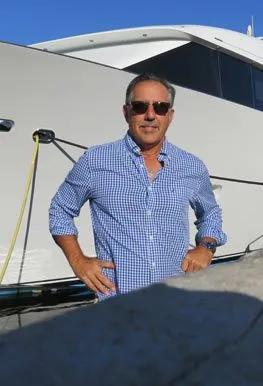
Robert Lama is the founder and principal broker of Miami International Yacht Sales, an IYBA-member luxury yacht brokerage based in South Florida. With over 13 years of experience in 100’–250′ class superyacht transactions, Robert has facilitated multi-million dollar acquisitions and new builds with leading shipyards in Italy and the Netherlands. His background in Commercial Real Estate in New York gives him a unique edge in complex yacht deal structuring and negotiation.