

By Robert Lama, President — Miami International Yacht Sales | Updated August 2026
Finding the right yacht broker in Miami — or any major yachting hub — is the single most important decision in a mega yacht transaction. Buying or selling a mega yacht or superyacht is among the most complex transactions a private individual or family office will ever execute. Vessels in the 60–250 foot class represent multi-million dollar assets with significant ongoing obligations — crew, maintenance, insurance, refit cycles, and eventual resale. The broker you choose to represent you through this process has a direct, measurable impact on the outcome.
After 14 years as a luxury yacht broker specializing in the 100’–250′ class from Miami’s most active superyacht market, Robert Lama has represented buyers and sellers in transactions from $1 million to well above $30 million. This guide covers exactly how to choose a yacht broker for the superyacht segment, the questions to ask a superyacht broker before signing before signing any agreement, and why the choice of representation matters more in this segment than in any other.
📞 Speak directly with Robert Lama: +1-305-857-8939
What Does a Mega Yacht and Superyacht Broker Do?
A superyacht broker provides specialized professional representation across every stage of a yacht transaction — from market search through to closing. The scope of services differs significantly between brokers who specialize in the mega yacht and superyacht segment and general marine brokerages that handle any vessel from a 25-foot bowrider to a 150-foot motor yacht.
| Service | Specialist Superyacht Broker | General Marine Broker |
|---|---|---|
| Market knowledge | Deep — specific to 60ft+ class | Broad but shallow in mega yacht segment |
| Off-market access | Active private network — pre-listing vessels | Public listings only (YATCO, YachtWorld) |
| Survey coordination | Metal-hull specialists, maritime attorneys | General surveyors |
| Negotiation | Experience with multi-million dollar transaction structures | Standard commission approach |
| New construction | Direct shipyard relationships — Italy, Netherlands | Referral-based |
| Closing support | Full coordination — documentation, escrow, flag registration | Standard bill of sale |
In the mega yacht segment, the difference between adequate and excellent broker representation routinely amounts to six figures in negotiation outcome alone — before accounting for the survey leverage, off-market access, and closing efficiency that specialist experience provides.
How to Choose a Yacht Broker for Luxury Mega Yachts — 7 Criteria
1. Verify IYBA Membership — Non-Negotiable for Miami Yacht Brokers
The International Yacht Brokers Association (IYBA) is the primary professional body governing yacht brokerage in the United States. IYBA membership requires adherence to a code of ethics, professional conduct standards, and continuing education requirements. Any broker representing you in a transaction above $1 million should be an active IYBA member — verifiable directly at iyba.org. Miami International Yacht Sales is an active IYBA member.
2. Verify Florida Yacht Broker Licensing
Florida requires yacht brokers to hold a valid state license — searchable at MyFloridaLicense.com. An unlicensed broker operating in Florida is a legal risk to your transaction. This is a non-negotiable baseline check for any Miami-based superyacht transaction.
3. Confirm Segment Specialization
A broker who primarily handles 30–50 foot production boats will not have the off-market network, negotiation experience, or survey specialist relationships needed for a 100–200 foot mega yacht transaction. Ask specifically: what was your most recent transaction in my size class? How many vessels above [your target size] have you personally closed in the last three years? The answers reveal real market depth — or the absence of it.
4. Evaluate Off-Market Access
The most sought-after mega yachts and superyachts in the 100’–250′ class rarely appear on YATCO or YachtWorld before going under offer. They move through private broker-to-broker networks. A specialist broker’s value in this segment is directly proportional to their off-market network — the number of active co-broker relationships they maintain across Fort Lauderdale, Monaco, Palma, and Dubai. Ask your broker: what percentage of your last 10 transactions involved off-market vessels?
5. Check Who Will Actually Handle Your Transaction
At large brokerage firms, your initial contact is often a senior broker — but the actual work is handed to a junior associate. This is particularly common in high-volume brokerages handling hundreds of transactions per year. Confirm before signing any agreement: will the broker I am meeting with personally handle my search, my negotiations, and my closing? At Miami International Yacht Sales, Robert Lama handles every transaction personally — no handoffs, no junior brokers.
6. Assess Market Knowledge Depth
A genuine miami yacht broker with real superyacht experience can tell you — without consulting a database — the approximate current market value of a specific vessel class in your size range, the typical survey issues to expect on that hull type and vintage, the going charter rate if applicable, and the realistic transaction timeline from offer to closing. If the broker needs to “check with the team” on basic market questions, their actual expertise may be shallower than their presentation suggests.
7. Understand Their Dual-Agency Policy
In yacht brokerage, a “central listing agent” represents the seller. A “buyer’s broker” represents the buyer. When one broker represents both parties in the same transaction — called dual agency — there is an inherent conflict. In multi-million dollar transactions, this conflict has real financial consequences. Ask any prospective broker: if you represent the seller on a vessel I want to buy, how do you handle that conflict? The answer tells you a great deal about their professional ethics.
Questions to Ask a Superyacht Broker Before Signing Any Agreement
These are the specific questions to ask a superyacht broker that Robert Lama recommends every buyer use any broker — regardless of reputation — before entering a buyer representation agreement:
| Question | Why It Matters |
|---|---|
| Are you an active IYBA member? | Verifies professional standards and ethics compliance |
| Do you hold a Florida Yacht Broker license? | Legal requirement — verifiable at MyFloridaLicense.com |
| Who will personally handle my transaction? | Prevents handoff to junior brokers after relationship established |
| How many vessels above [my target size] have you personally closed in the last 3 years? | Reveals actual segment experience vs claimed expertise |
| What does your off-market network look like at my target size? | Off-market access is where specialist broker value concentrates |
| How do you handle dual agency situations? | Reveals ethics stance and potential conflicts of interest |
| Which surveyors do you recommend for metal-hull vessels? | Specialist survey knowledge critical for steel/aluminum mega yachts |
| What is your typical timeline from offer to closing at this size? | Sets realistic expectations and reveals transaction experience |
What Does a Superyacht Broker Cost? — Commission Explained
The standard commission structure in yacht brokerage is one of the most misunderstood aspects of the transaction process. Here is how it actually works in the mega yacht and superyacht segment:
- Seller pays all commission. In a standard yacht sale, the seller pays 100% of the broker commission — typically 10% of the purchase price on vessels below $1M, and 5–10% on larger vessels depending on size and complexity. The buyer pays no direct brokerage fee.
- Co-brokerage splits. When a buyer is represented by their own broker and the vessel has a separate central listing agent, the commission is split — typically 60/40 in favor of the listing broker, or 50/50 in co-brokerage situations. This split comes entirely from the seller’s commission payment. The buyer’s total cost does not change.
- Buyer representation is free. From the buyer’s perspective, engaging an independent buyer’s broker costs nothing directly — the seller funds all brokerage costs. This is one of the most underutilized advantages available to serious superyacht buyers.
For the full breakdown of superyacht brokerage fees, co-brokerage splits, and what to watch for in listing agreements, see our complete superyacht brokerage fees guide.
International Yacht Brokers vs Miami-Based Specialists
International brokerage firms — particularly those headquartered in Monaco, Palma, and London — have strong presences in the Mediterranean market. For buyers and sellers operating primarily in South Florida, the Bahamas, and the Caribbean, a Miami-based specialist often provides meaningful practical advantages:
| Factor | Miami-Based Specialist | European International Firm |
|---|---|---|
| Florida market knowledge | Deep — active daily in Miami/Fort Lauderdale market | Moderate — operates from offshore |
| US documentation and legal | Direct relationships with Florida maritime attorneys | Referral-based for US closings |
| Survey coordination in Florida | Established local surveyor relationships | Requires coordination across time zones |
| Florida sales tax structure | Expert — $18,000 cap guidance included | May refer out for US tax questions |
| Bahamas/Caribbean access | Strong — local cruising ground expertise | Caribbean from European perspective |
| European inventory access | Via co-brokerage network | Direct — Mediterranean market |
The right choice depends on where the vessel will operate and where the buyer is based. For buyers acquiring in Florida and planning to cruise American waters, a Miami-based IYBA specialist with active European co-brokerage relationships typically delivers the best combination of local knowledge and global inventory access.
Why Miami International Yacht Sales — Robert Lama’s Approach
Miami International Yacht Sales was founded in 2011 by Robert Lama — Principal Broker and IYBA member — after a career building and selling Lama Commercial Insurance Brokerage, which was subsequently acquired by First Niagara Financial Group. That transaction background directly informs Robert Lama’s approach to mega yacht brokerage: disciplined deal structure, independent valuation, and protection of the client’s financial position throughout the process.
What distinguishes Miami International Yacht Sales in the 100’–250′ class:
- Direct principal access: Robert Lama handles every transaction personally — every call, every showing, every negotiation, every survey review. No handoffs to junior brokers.
- Off-market network: Active co-brokerage relationships across Fort Lauderdale, Monaco, Palma, and Dubai — giving buyers access to inventory before public listing.
- Independent representation: No dealer alignment, no inventory pressure. Advice reflects the client’s interests exclusively.
- Florida expertise: 14 years of active Miami brokerage — full command of the $18,000 Florida sales tax cap, USCG documentation, and South Florida survey infrastructure.
- Buyer cost: $0. The seller pays all commission. Buyer representation costs nothing directly.
Browse our current mega yachts and superyachts for sale or contact Robert Lama for a private consultation on any specific vessel or search requirement.
Frequently Asked Questions — Superyacht Broker, Mega Yacht Broker & Yacht Broker Miami
What does a superyacht broker do — and why do I need one?
A superyacht broker provides professional representation across every stage of a yacht transaction — market search, off-market sourcing, valuation, offer structuring, survey coordination, negotiation, and closing. In the mega yacht segment (60m+), specialist brokers also coordinate maritime attorneys, flag-state registration, USCG documentation, and technical specialists who are beyond the scope of general marine brokers.
How do I find the best yacht broker in Miami?
For a yacht broker in Miami, verify three things: active IYBA membership (iyba.org), Florida Yacht Broker license (MyFloridaLicense.com), and confirmed personal transaction experience in your specific size class. Reputation and presentation are secondary to these verifiable credentials. Miami International Yacht Sales meets all three — contact Robert Lama at +1-305-857-8939 for a direct consultation.
How much does a yacht broker cost in Miami?
For buyers, yacht broker representation typically costs nothing directly — the seller pays all broker commission (typically 5–10% of purchase price depending on vessel size and complexity). In a co-brokerage situation, this commission is split between the listing broker and the buyer’s broker entirely from the seller’s payment. Buyer representation is effectively free professional service — making it one of the most underutilized advantages in yacht acquisition.
What is an international yacht broker?
An international yacht broker sources and represents vessels globally — accessing inventory across the US, European, and Asia-Pacific markets through co-brokerage networks. Miami International Yacht Sales operates as an international broker through active co-brokerage relationships in Fort Lauderdale, Monaco, Palma, and Dubai, while maintaining primary expertise in the South Florida and Caribbean market.
Do I need a separate broker from the seller’s broker?
Not required — but strongly recommended for transactions above $1 million. When one broker represents both buyer and seller (dual agency), there is an inherent conflict of interest in a negotiation where six figures of price movement are typical. Independent buyer representation ensures your broker’s undivided loyalty is to your outcome — and it costs you nothing, since the seller funds all commission.
What is a superyacht broker commission?
Standard superyacht broker commission runs 5–10% of purchase price, paid by the seller. On a $5M vessel, that is $250,000–$500,000 — typically split 50/60% to the listing broker and 40/50% to the buyer’s broker in co-brokerage transactions. The buyer pays none of this directly. For full details on commission structures, splits, and what to watch for in listing agreements, see our superyacht brokerage fees guide.
What questions should I ask a yacht broker?
The eight essential questions to ask a superyacht broker — and a yacht broker in Miami specifically: (1) Are you an active IYBA member? (2) Do you hold a Florida Yacht Broker license? (3) Who personally handles my transaction? (4) How many vessels in my size class have you personally closed in the last 3 years? (5) What does your off-market network look like? (6) How do you handle dual agency? (7) Which surveyors do you recommend for metal-hull vessels? (8) What is your typical timeline from offer to closing? The answers to these questions reveal real expertise — or the absence of it.
What is the difference between a yacht broker and a central agent?
A central agent (or listing agent) represents the seller — marketing the vessel, managing showings, and negotiating on the seller’s behalf. A buyer’s broker represents the buyer — searching the market, identifying suitable vessels, and negotiating to protect the buyer’s interest. One broker can act as both (dual agency) but this creates conflict. In high-value transactions, having separate representation for each party is the professional standard.
Contact Miami International Yacht Sales
Miami International Yacht Sales provides independent brokerage representation for buyers and sellers of mega yachts and superyachts in the 100’–250′ class. Every consultation is private, obligation-free, and handled personally by Robert Lama — IYBA-licensed Principal Broker.
- 📞 Phone: +1-305-857-8939
- 📧 Email: bob@miamiys.com
- 📍 Location: 953 Harbor View N, Hollywood, FL 33019 (By Appointment)
See our top yacht brands 2026 guide for comprehensive brand coverage, or browse our current yacht listings for active South Florida inventory.
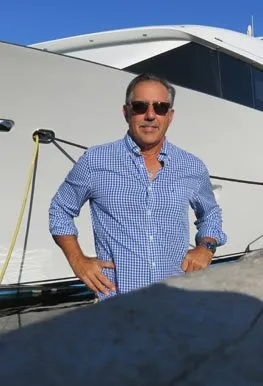
Robert Lama is the founder and principal broker of Miami International Yacht Sales, an IYBA-member luxury yacht brokerage based in South Florida. With over 13 years of experience in 100’–250′ class superyacht transactions, Robert has facilitated multi-million dollar acquisitions and new builds with leading shipyards in Italy and the Netherlands. His background in Commercial Real Estate in New York gives him a unique edge in complex yacht deal structuring and negotiation.